
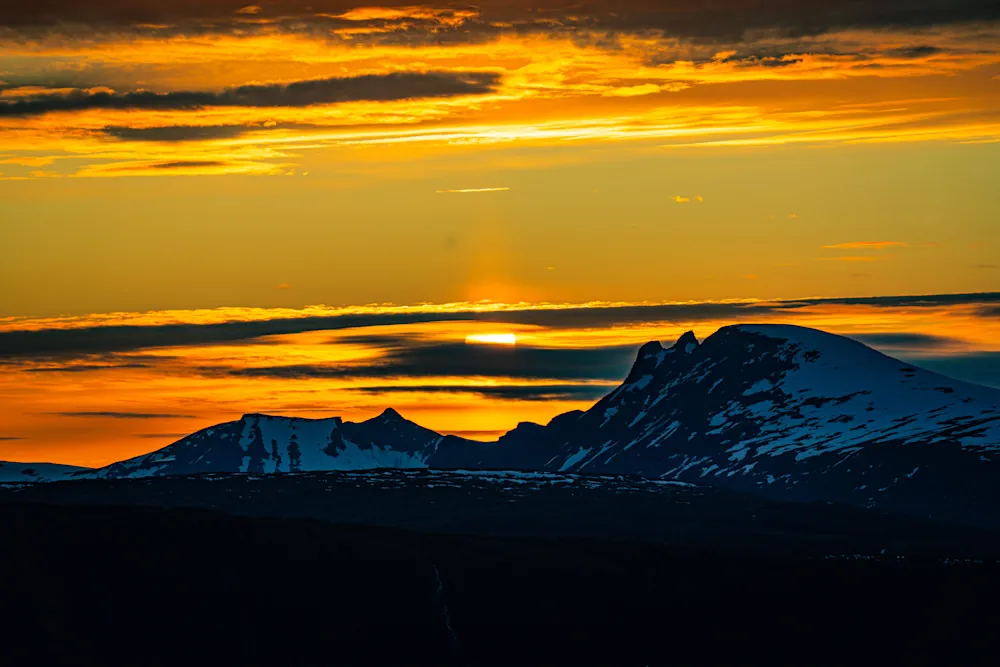
The astronomical summer officially begins this weekend. On Sunday, June 21, 2026, at 08:25 UTC, the Northern Hemisphere reaches its maximum tilt toward the sun. This alignment triggers the official start of the summer solstice, bringing the longest day of the year to the upper half of the globe.
For regions located north of the Arctic Circle, this tilt creates the Midnight Sun, a natural phenomenon where the sun does not set. Instead of dipping below the horizon, the sun remains visible for a full 24 hours, providing continuous daylight to communities across the extreme northern latitudes, according to a recent report by Forbes.
The Mechanics of the Solstice
The event is entirely driven by the Earth’s axis, which is tilted at an angle of approximately 23.5 degrees relative to its orbit around the sun. During the June solstice, the North Pole tilts most directly toward the sun.
The word solstice is derived from the Latin term “solstitium,” which translates directly to “sun stands still.” Astronomers use this term because the sun’s apparent path across the sky stops moving northward before reversing direction, a mechanical reality outlined by Space.com.
Because of this geometry, the sun traces a shallow circle in the sky for observers near the poles. It reaches its highest point at local noon and its lowest point at local midnight, but it never fully disappears behind the Earth’s curvature.
Global Traditions and the Midnight Sun Game
The extended daylight hours prompt historical and cultural celebrations worldwide. In Sweden, Midsummer Eve took place on June 19 as a major national holiday. On Grímsey, Iceland’s northernmost inhabited island located directly on the Arctic Circle, locals and tourists are currently gathering for the annual Summer Solstice Festival running through Sunday.
In North America, Fairbanks, Alaska, is leveraging the continuous sunlight for a unique sporting tradition. The city is currently hosting the 121st edition of its historic Midnight Sun Game. The Alaska Goldpanners are scheduled to play the Utah Yaks in a baseball game that begins at 10:00 PM. The game is played entirely without artificial lights, relying strictly on the natural glow of the midnight sun, a tradition tied directly to the precise timing of the 2026 summer solstice.
The Geographical Boundaries of the 24-Hour Solar Phenomenon
The occurrence of the Midnight Sun is strictly bound by latitude. The Arctic Circle, located at approximately 66.5 degrees north of the Equator, marks the exact southernmost latitude where the sun can remain continuously above the horizon for 24 hours during the June solstice.
As you move further north from the Arctic Circle, the duration of the Midnight Sun increases. While communities sitting exactly on the line experience just one day of continuous sunlight, locations closer to the North Pole experience weeks or even months of unbroken daylight. This predictable cycle dictates everything from local ecological rhythms to the intense, condensed tourist seasons in towns like Fairbanks and Grímsey.