
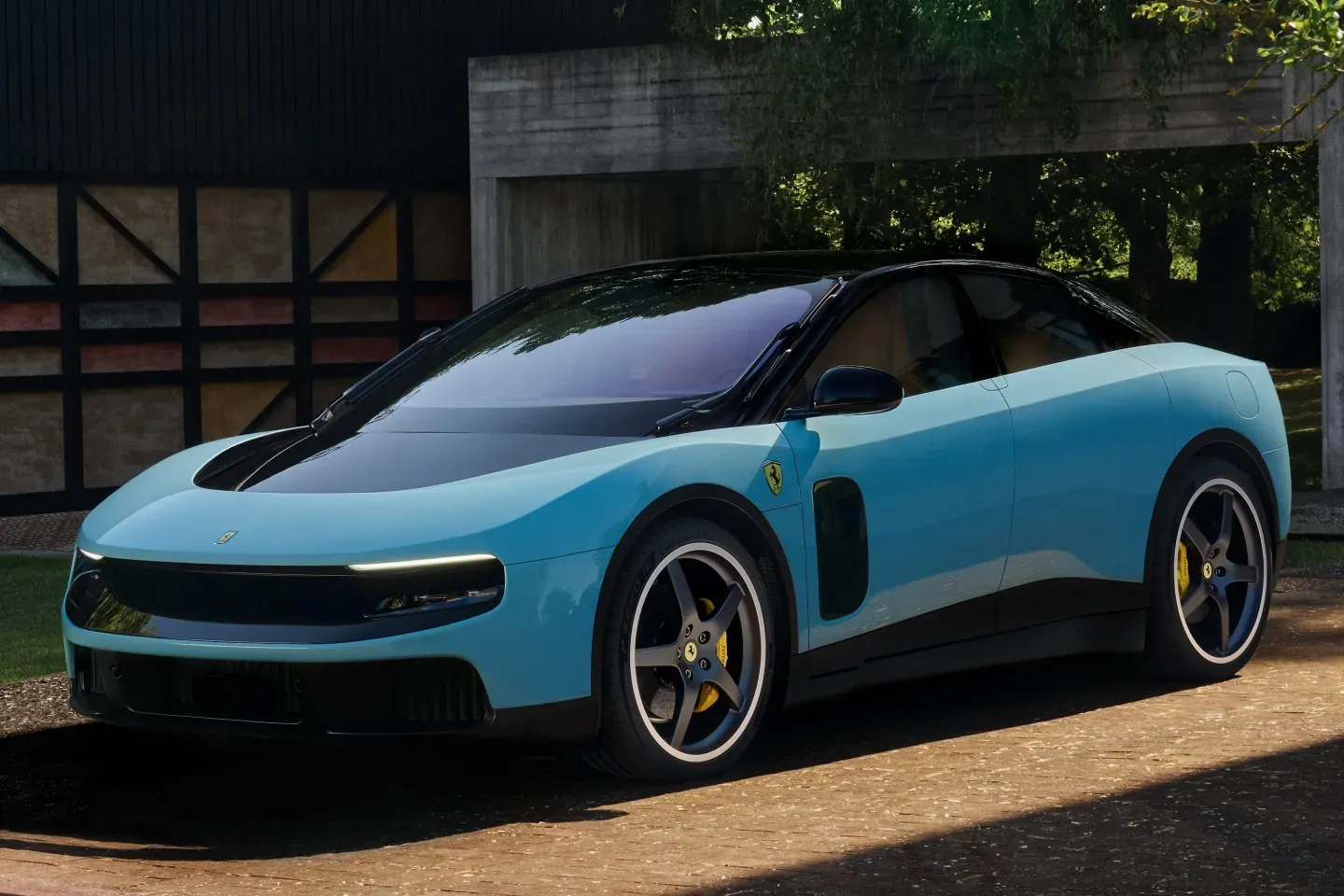
Ferrari is deploying its controversial new all-electric vehicle, the Luce, as a stringent loyalty test for its high-net-worth clientele. Wealthy collectors are increasingly treating the €550,000 quad-motor EV as a mandatory stepping stone to maintain their status on the Italian automaker’s notoriously strict waiting list.
Despite a polarizing reception following its May 25 reveal, the 1,035-horsepower Luce is effectively becoming the price of admission for Maranello’s elite. Buyers are securing allocations not necessarily for the vehicle itself, but to guarantee future access to highly exclusive, limited-production models.
Ferrari operates on a tightly controlled scarcity model, shipping roughly 14,000 vehicles annually to ensure demand continuously outstrips supply. The allocation system historically favors clients who visit dealerships frequently, spend heavily, and hold onto their cars rather than selling them for immediate profit.
The introduction of the Luce EV introduces a new calculation into this ecosystem. Equipped with a 122 kWh battery, the five-seat electric vehicle is a radical departure from the brand’s traditional V12 lineage. Collectors are being signaled that passing on the EV could cost them their standing for upcoming limited-run hypercars.
Market expectations suggest the Luce will likely face heavy depreciation once it leaves the showroom floor. However, the initial financial hit is calculated into the broader portfolio strategy of top-tier VIPs.
How the Luce Replaces the 2 GT in Ferrari’s Sales Strategy
This allocation tactic directly mirrors Ferrari’s historical practice of using its four-seat GT models to screen potential hypercar buyers. Historically, clients were required to purchase series-production, softer GT cars—such as the California, FF, GTC4Lusso, and Portofino—to build their profile before receiving an invitation to purchase multi-million-dollar halo cars.
By slotting the Luce EV into this exact strategic gateway role, Ferrari is insulating its electric transition against fluctuating market demand while enforcing its traditional hierarchy. The move ensures the automaker can move units of a controversial new drivetrain by tying its ownership to the brand’s most desirable future assets.