
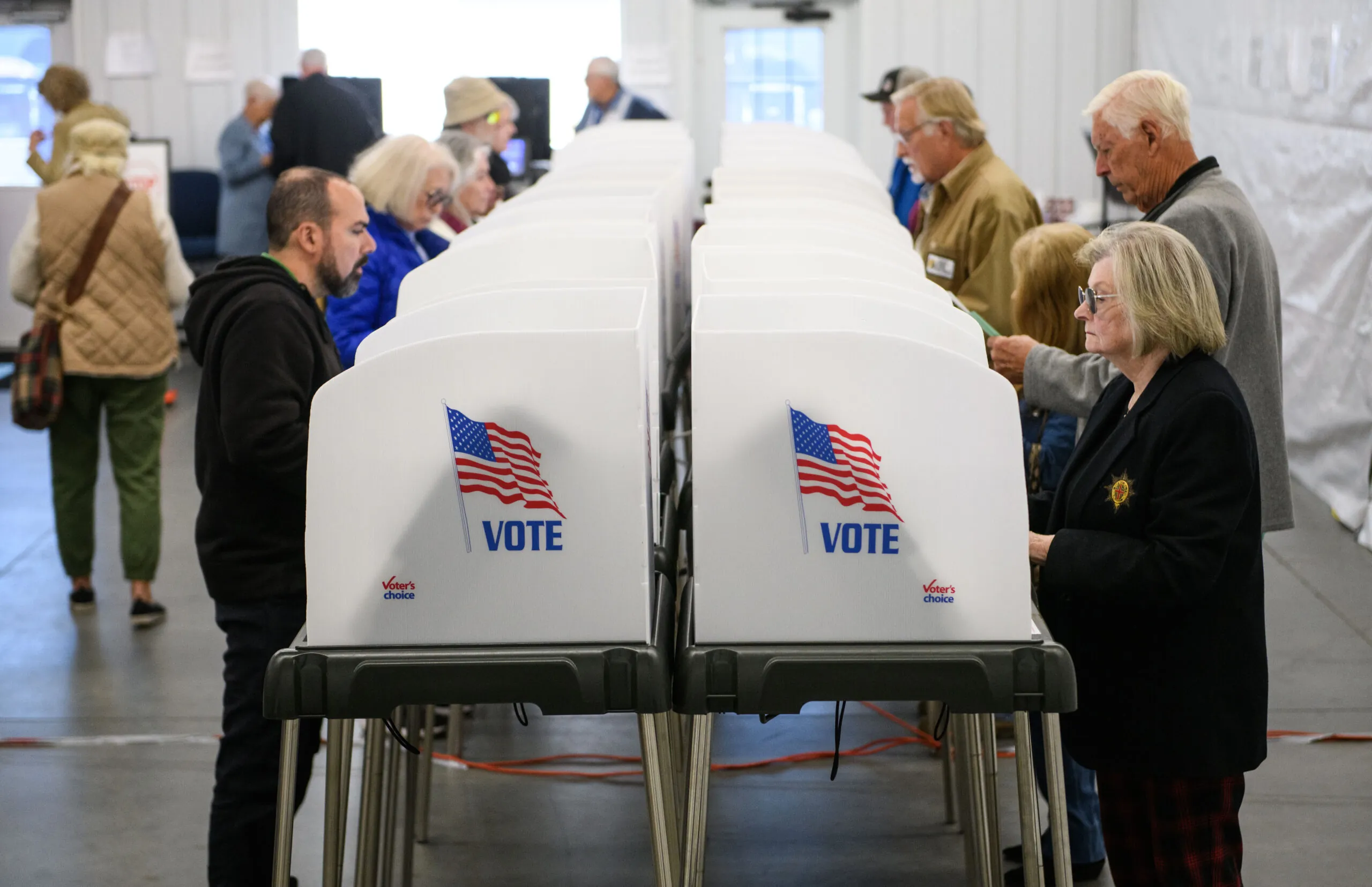
Primary elections dictate which names appear on a general election ballot, but the specific rules governing these contests vary across jurisdictions. A jungle primary election system places all candidates running for a specific office onto a single ballot, completely ignoring political party affiliations. Under this mechanism, the two candidates who secure the highest number of votes advance directly to the general election. This setup means that voters might face a choice between two members of the exact same political party when the final vote occurs in November.
This method differs fundamentally from traditional primary elections, where political parties select their own individual nominees to run against each other. In a standard partisan system, a ballot contains separate tracks for Democrats, Republicans, and third parties. The jungle primary, officially known as a nonpartisan blanket primary or a top-two primary, removes these separate tracks entirely. Everyone votes on the same list of candidates, and party control over the nomination process is minimized.
Background: How We Got Here
The development of the modern jungle primary system grew out of long-running legal and political battles over how states manage voter access and party control. Historically, states utilized closed or open primaries to determine party nominees. In a closed primary, only voters registered with a specific political party can cast a ballot for that party’s candidates. Open primaries allow voters to choose which party ballot they want to use on election day, but they must still stick to one party for the entire ballot.
Some states wanted to give voters more freedom, leading to the creation of the original blanket primary. In a traditional blanket primary, voters could switch between parties for different offices on the same ballot. A voter could choose a Democratic candidate for governor and a Republican candidate for the senate. However, the top vote-getter from each party still advanced to the general election. Political parties successfully challenged this system in court, arguing it violated their constitutional right of association by letting non-members select their nominees.
To bypass these legal objections, states modified the blanket primary into the nonpartisan top-two format used today. Washington state voters approved this shift via Initiative 872 in 2004. Political parties filed lawsuits to block the change, leading to a major legal battle. In 2008, the U.S. Supreme Court ruled on the matter in Washington State Grange v. Washington State Republican Party. The court upheld the system because the primary does not choose a party’s official nominee, but instead filters all candidates down to the top two finishers.
California followed a similar path shortly after Washington’s legal victory. California voters approved Proposition 14 in 2010, which established the top-two system for state legislative and congressional races. The system went into effect for California elections starting in 2012. Nebraska also uses a nonpartisan top-two system, though it applies strictly to its unique unicameral state legislature. These state-level shifts altered how campaigns operate and changed the math required to win public office.
Key Players and Stakeholders
The implementation of a jungle primary system reshapes the roles of political parties, candidates, and voters during the election cycle. In traditional systems, political party leaders and highly active partisan voters hold significant influence over who wins a nomination. Because traditional primaries often see low voter turnout, candidates tend to cater to the more ideologically extreme members of their base to secure a win. The top-two system reduces the institutional power of party leadership by removing their ability to guarantee a spot for their chosen nominee on the November ballot.
For independent and unaffiliated voters, the top-two primary alters their relationship with the electoral process. In states with closed primaries, independent voters are completely excluded from the primary round unless they temporarily alter their party registration. In a jungle primary, these voters receive the exact same ballot as registered partisans. This gives independent voters a direct say in narrowing down the field of candidates during the early stages of the election when the widest variety of choices is available.
Candidates running for office must completely change their campaign strategies under these rules. Instead of focusing solely on appealing to hardline party members, candidates must build broader coalitions from the very beginning of the race. A candidate running in a heavily partisan district cannot rely simply on winning a party nomination. They must consider how to appeal to moderate voters and members of the opposing party to secure one of the top two spots.
Minor political parties and independent candidates face a particularly difficult environment under these rules. Because the system limits the general election to only two options, third-party candidates rarely secure enough votes to advance past the primary stage. This dynamic effectively removes Green Party, Libertarian, and independent candidates from the November ballot, consolidating choices around the two most heavily funded campaigns.
What’s at Stake
The ongoing debates surrounding the jungle primary center on how the system impacts political moderation, voter turnout, and election outcomes. Proponents argue that the mechanism helps curb political polarization by forcing candidates to appeal to a wider audience. If two candidates from the same party advance to the general election, they must compete for the votes of the opposing party’s members. According to a glossary guide by the Model Diplomat, this pressure can incentivize politicians to govern from a more moderate position once they take office.
Real-world examples show how this dynamic plays out during actual elections. During the 2016 U.S. Senate election in California, the top two finishers in the primary were both Democrats. This meant the November general election featured a direct contest between Kamala Harris and Loretta Sanchez. Without a Republican on the ballot, conservative voters had to choose which Democratic candidate better aligned with their specific interests, altering the typical partisan campaign dynamic.
However, critics point out that the system carries severe risks of vote-splitting, which can lead to unexpected outcomes. If one political party runs too many candidates in a district, those candidates split the party’s base vote into small fractions. This splitting can allow two candidates from a minority party to sneak into the top two spots, even if the majority of the district prefers the other party. Political parties now spend significant resources trying to clear the field and prevent too many of their own candidates from running in the primary.
The system also impacts how voters engage with the general election ballot. When a general election features two candidates from the same political party, voters from the excluded party often experience voter alienation. A Republican voter facing a choice between two Democrats, or a Democratic voter facing two Republicans, may decide to skip that specific race entirely. This dynamic can lead to lower overall participation in regions where one party holds a dominant advantage.
Variations of the system also exist, creating different outcomes depending on the local statutory rules. Louisiana utilizes a specific variant of the system for its state and congressional elections. According to election data tracked by Ballotpedia, the Louisiana system allows a candidate to win an election outright in the first round if they secure more than 50 percent of the total vote. If no candidate hits that absolute majority threshold, the top two finishers move on to a runoff election to decide the winner.
Other jurisdictions are exploring even broader expansions of the blanket primary concept. Alaska implemented a top-four primary system, which advances the four highest vote-getters to the general election. The general election then uses a system of ranked-choice voting to determine the final winner. These different models show that the debate over primary structures remains a central component of election law reform across the country.
Frequently Asked Questions
What is the difference between a jungle primary and an open primary?
An open primary requires a voter to choose one specific political party’s ballot to cast their votes, meaning they cannot vote for candidates from multiple parties for different offices. A jungle primary puts every single candidate onto one ballot, allowing voters to pick a Republican for one office and a Democrat for another during the primary round.
Can two candidates from the same party face each other in the general election?
Yes. Because the system automatically advances the two candidates who receive the most votes overall, political party affiliation does not matter. If two Democrats or two Republicans finish in first and second place during the primary, they will be the only two options on the ballot in the general election.
Can a candidate win an election outright during the primary?
In standard top-two systems like those in California and Washington, candidates cannot win the office during the primary, even if they get a majority of the votes. They must still participate in the general election. However, in Louisiana’s majority-vote variant, a candidate who wins more than 50 percent of the vote in the first round wins the office immediately.
How does the top-two system affect third-party candidates?
The system generally reduces the visibility of minor parties in general elections. Because third-party candidates rarely finish in the top two positions during a crowded primary, they are almost always excluded from the November ballot, leaving voters to choose between the two major parties.
Do jungle primaries reduce political polarization?
The political impact remains a subject of ongoing study among experts. While the system forces candidates to speak to a broader base of voters during the campaign, empirical research tracked by the Ballotpedia research team shows mixed results regarding whether the system consistently elects more moderate legislators over the long term.