
Jensen Huang made a very specific promise back in 2018. When Nvidia launched the RTX 20-series graphics cards, the company insisted that hardware-accelerated ray tracing was the absolute future of computer graphics. They were right about the destination, but the transition was incredibly painful. The brute-force mathematical cost of tracing light paths brought the best gaming PCs on the market to their knees.
Gamers quickly figured out the catch. Early adopters who spent thousands of dollars on new hardware had to drop their display resolutions from pristine 4K down to 1080p just to keep their games running smoothly with the new lighting effects turned on. The true industry shift did not come from the hardware itself. It came from a software band-aid designed to hide the hardware’s limitations.
To fix this “ray tracing tax,” Nvidia introduced Deep Learning Super Sampling (DLSS), a software trick that rendered games at a lower resolution and used AI to guess what the missing pixels should look like. The first version was blurry and full of visual artifacts. Today, that narrative has completely flipped, according to an editorial by XDA Developers analyzing how DLSS overshadowed ray tracing as the ultimate PC gaming revolution. Software upscaling is no longer a compromise; it is the main event.
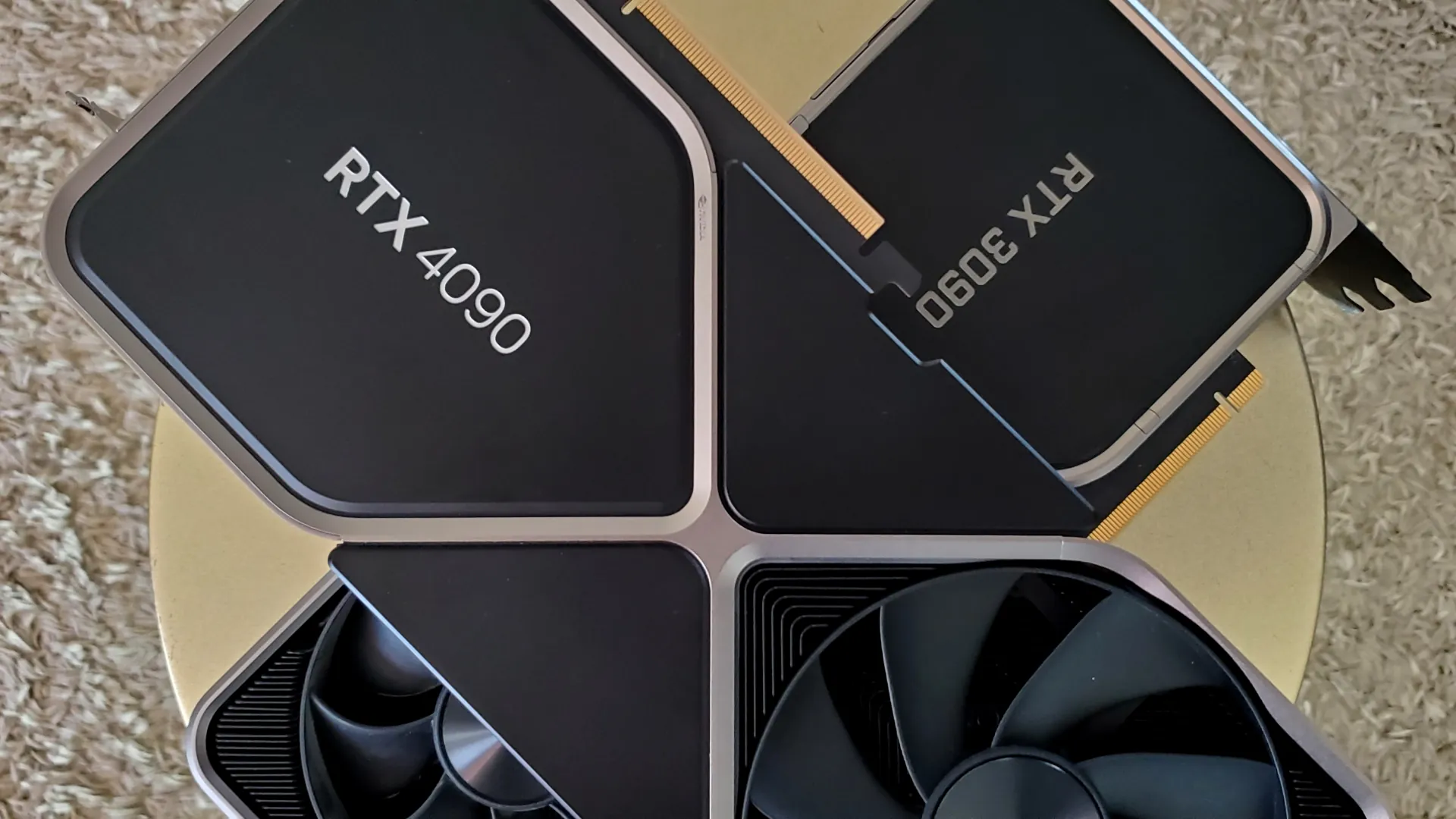
This reliance on AI is actively altering consumer buying habits in 2026. Upscaling technology has gotten so proficient that it frequently produces a cleaner, sharper image than standard native 4K rendering with traditional anti-aliasing. Because of this, thousands of RTX 4090 owners are actively skipping the $2,000 RTX 5090 upgrade. Buyers are looking at a 30% raw hardware performance bump and deciding it simply isn’t worth the cash when DLSS handles the heavy lifting so effectively.
Game developers are leaning fully into this new reality. Studios are no longer optimizing their engines to run natively at high resolutions. Modern titles like Indiana Jones and the Great Circle and Doom: The Dark Ages now make ray tracing a mandatory, built-in feature rather than an optional menu toggle. They assume you are using an upscaler to make the game playable.
The Era of Neural Rendering Takes Over
Nvidia knows exactly where the actual value lies. They are barely talking about traditional rasterization anymore. The company is treating the physical graphics card as nothing more than a vessel for their neural networks.
This strategy crystallized earlier this year, detailed in an official March 2026 announcement from Nvidia outlining DLSS 5 and the shift toward real-time neural rendering. This update moves far beyond simply stretching a small image into a bigger one. The software now actively infuses pixels with photorealistic lighting and material textures using AI inference on the fly.
The processing architecture reflects this change. Instead of just throwing more raw rendering cores at a screen, the system relies heavily on AI logic, a mechanism explained in a technical breakdown of how RTX 50-series hardware uses Transformer Neural Networks to balance ray tracing demands. The traditional GPU war is effectively over. The new battleground is entirely about which company writes the smartest algorithm to hallucinate the graphics we see on screen.