
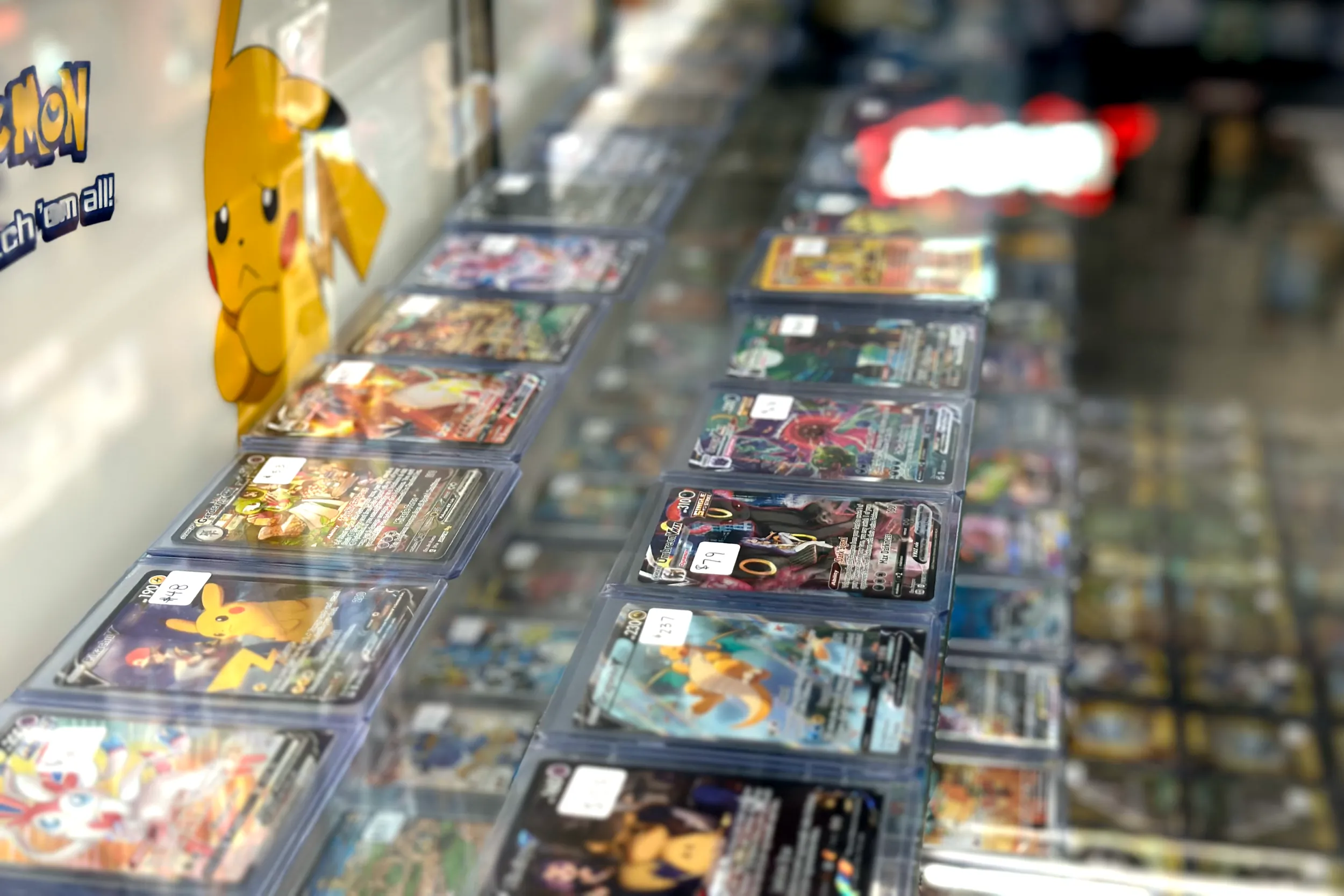
The Pokémon Company updated its official sales data on Wednesday, revealing it printed more than 10 billion trading cards in the last year and surpassed 515 million lifetime video game units shipped, as the entertainment conglomerate struggles to meet unprecedented global demand fueled by the ongoing secondary market scalping crisis. The record production run pushes the franchise past a historic threshold of 85 billion total cards printed since its inception. Despite manufacturing enough physical inventory in a single 12-month period to outnumber the global human population, major retail chains continue to face severe supply chain shortages, unchecked scalping, and significant logistical security threats.
The soaring secondary market value of these physical assets has triggered a wave of retail crime as inventory disappears from shelves. A Florida man was recently arrested for executing a $12,000 card heist using a battery-powered chainsaw. In a separate incident, an individual was arrested in Pasadena, California, after hiding inside a closed Best Buy to gain priority access to an incoming Pokémon card shipment.
The company also continues to dominate the software sector. The brand shipped 16 million game units over the last year, pushing the all-time software total to 515 million units globally. This includes 4 million copies of the recent release Pokémon Pokopia and 12 million copies of Pokémon Legends: Z-A across the Nintendo Switch and Switch 2 ecosystems.
How Unprecedented Scalping Economics Impact Big-Box Retail Strategies
The sheer scale of The Pokémon Company’s manufacturing output highlights a systemic pricing and distribution failure in the physical collectibles market. When a company can print 10 billion units and still fail to saturate the market, the issue transitions from a simple supply shortage to a localized retail security crisis. Retailers like Best Buy and Target are now forced to treat low-cost cardboard products as high-risk electronics.
This market condition forces big-box chains to completely overhaul their floor layouts and loss-prevention protocols. The ongoing secondary market arbitrage, where individual scalpers can immediately flip physical inventory for substantial profit, incentivizes extreme behavior like the $12,000 chainsaw theft. Until the publisher can out-print the artificial scarcity created by third-party resellers, traditional retailers will continue to bear the physical and financial costs of securing the inventory.