
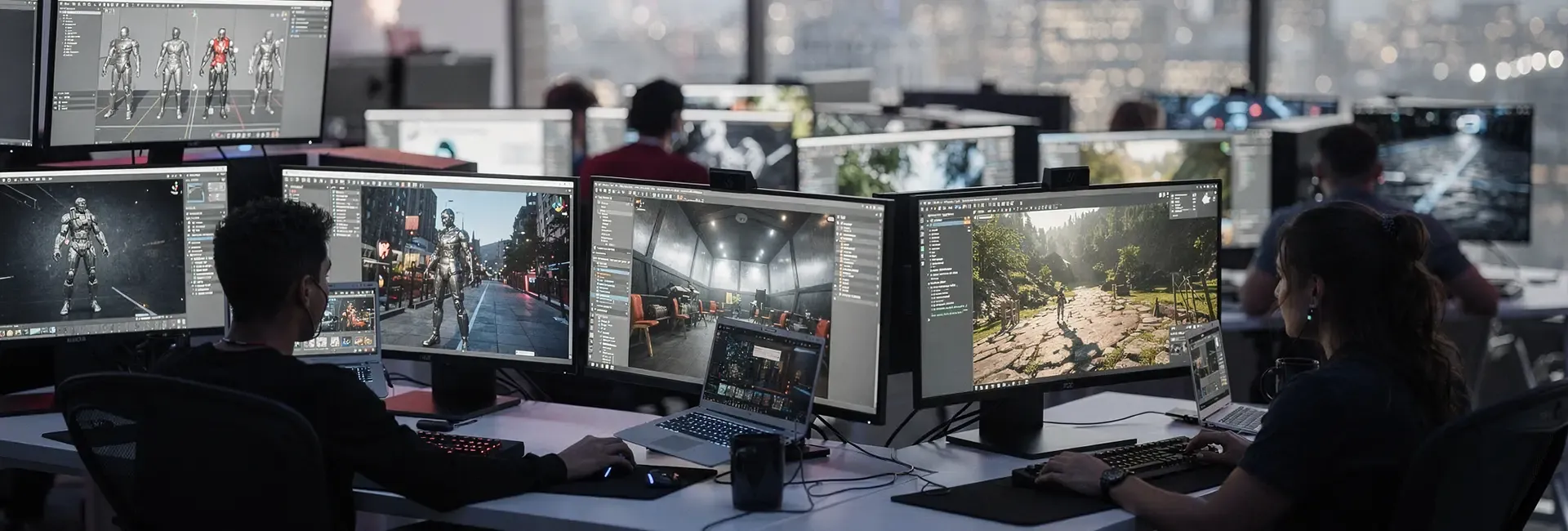
You walk into a store or open a digital storefront and see a brand new video game sitting there with a seventy-dollar price tag. The answer to why it costs that much comes down to human labor, hardware certification, engine licensing fees, and marketing budgets that equal the cost of the game itself. Retail pricing is a direct mirror of the financial risk a studio takes. A simple mobile game can be built for a few thousand dollars and given away for free. A high-end console game requires hundreds of developers working for years, forcing publishers to raise the base price to offset their immense investment.
Think about what happens inside a modern gaming machine. Your console or computer is processing millions of polygons every single second. It simulates wind physics, fabric tearing, and water ripples all at once. Artificial intelligence routines make decisions in fractions of a second so that digital enemies react realistically to your actions. Creating that geometry and logic requires an astonishing amount of human effort. Every single tree, rock, and building has to be placed or programmed. The financial mechanics behind these virtual worlds dictate exactly what you pay at the checkout screen.
The math is straightforward. You have teams of three hundred people working for five years. They use cutting-edge motion capture suits. They record orchestras for the soundtrack. Every single detail costs money. And because publishers need to recoup those costs, the retail price reflects the absolute necessity of turning a profit on an incredibly expensive piece of entertainment technology.
Feature Comparison: How Budget Tiers Dictate the Price Tag
Different types of software require entirely different business models. You cannot price a simple phone app the same way you price a sprawling virtual reality epic. A solo developer working from a bedroom has completely different financial pressures than a corporation with a thousand employees. Let’s look at how the initial budget directly dictates the final retail strategy.
| Project Tier | Average Budget Range | Core Technical Focus | Typical Retail Price |
|---|---|---|---|
| Hyper-Casual Mobile | Often under fifty thousand dollars | Simple 2D mechanics, fast gameplay loops, basic user interface design. | Free (Ad-supported) |
| Mid-Tier / Indie PC | Hundreds of thousands to a few million dollars | Unique art styles, tight gameplay systems, highly optimized code. | Twenty to forty dollars |
| AAA Blockbuster | Consistently well past a hundred million dollars | Photorealistic 3D graphics, complex physics engines, fully voiced dialogue. | Seventy dollars |
The chart makes the relationship obvious. When the financial risk goes up, the barrier to entry goes up. A mobile developer needs millions of people to download a free game just to make a few thousand dollars on advertisements. A high-end studio needs millions of people to hand over seventy dollars just to break even on their initial coding and art expenses.
Common Issues and Fixes: Managing the Financial Reality of Game Creation
Making a video game is essentially building a highly complex piece of computer software while also producing an animated movie at the same time. Things go wrong. Schedules slip. Budgets inflate rapidly. Here is how studios try to keep costs under control so they do not have to charge you a hundred dollars just to buy a single game.
The Heavy Cost of Human Talent
Building an interactive virtual world requires highly specialized skills. Programmers write the physics rules and network code. Artists sculpt 3D models using advanced digital clay. Audio engineers mix sound effects for every single footstep. Every single person expects a competitive salary in the technology sector. A mid-sized studio might spend tens of thousands of dollars every month just keeping the lights on. A premier studio with hundreds of employees burns through millions of dollars in payroll every thirty days.
The Fix: Studios optimize their technical workflows constantly. They use procedural generation algorithms to build environments faster. Instead of an artist placing every single tree in a forest by hand, a computer program randomly generates the terrain based on mathematical rules. Developers also buy pre-made digital assets for background objects to save time and money on art production.
The Invisible Marketing Burden
But here is the thing. Making the game is only half the battle. People need to know it exists. Billboards, web advertisements, and influencer sponsorships cost an immense amount of money. Industry guidelines routinely suggest that a high-end game’s promotional campaign will equal nearly all of its actual production budget. If a team spends fifty million dollars coding a game, the publisher often spends another fifty million convincing you to buy it. Mobile games operate on an even more extreme scale. Some mobile developers spend three times their production budget just buying advertisements to acquire new users in a crowded market.
The Fix: Developers rely heavily on community management and organic word of mouth. Indie creators release early prototypes to build a fan base naturally. They post behind-the-scenes engineering videos on social media. Word of mouth lowers the marketing budget drastically and helps keep the final retail price down.
Engine Licensing and Platform Taxes
You do not just write code from scratch. You rent a game engine. Software companies like Epic Games or Unity provide the foundational tools to render graphics and calculate physics. These companies take a percentage of your sales or charge a fee per installation. Then you put your game on a digital storefront. The storefront owner takes a thirty percent cut of the retail price. The complexity of optimizing software for specific hardware platforms adds expensive certification and hardware testing phases that smaller projects avoid.
The Fix: Developers adjust their initial budget heavily to account for these technical taxes. Some highly successful studios build their own internal graphics engines to avoid paying software royalties entirely. They keep their code strictly in-house, which requires a huge upfront investment but saves millions of dollars over the long term.
Alternative Methods or Tools: Avoiding the Upfront Retail Price
When budgets get too high, charging a flat retail price stops working. Consumers will only pay so much upfront for a piece of software. The technology industry invented alternative pricing models to fund their most ambitious projects without asking players to empty their wallets on day one.
The Free-to-Play Microtransaction Model
Instead of charging seventy dollars up front, the studio gives the game away for free. They sell cosmetic items, character skins, and digital battle passes inside the software. This strategy removes the initial price barrier entirely. Players download the game instantly. They spend a few dollars at a time to customize their experience. Over a few years, a single dedicated player might spend hundreds of dollars. This covers the high development budget without scaring away new players who just want to try the mechanics.
Early Access Funding
You release an unfinished version of the game to the public. You charge thirty dollars instead of sixty. Players buy the software knowing it has bugs and missing features. They act as volunteer quality assurance testers. The studio uses that incoming money to fund the rest of the development cycle. The retail price goes up when the final version officially releases. It is a brilliant way to fund production without taking on huge publisher debt.
Subscription Services
Players pay a flat monthly fee to access a large digital library of games. The platform holder pays the development studio a lump sum to include their game in the catalog. The studio gets guaranteed money to cover their engineering budget immediately. The player never pays a direct retail price for that specific software. This model completely separates the development budget from the individual retail price tag, treating video games more like streaming television.
Post-Launch Live Services
Modern games are no longer finished when they hit the physical shelf or digital store. Multiplayer architecture, anti-cheat security systems, and continuous seasonal updates cost thousands of dollars a month to maintain. The budget never stops growing. Because the servers require constant electricity and maintenance, developers rely on ongoing revenue streams to keep the project alive. The retail price is often just an entry fee to a much larger, ongoing financial ecosystem.
Frequently Asked Questions
Why did new video games start costing seventy dollars?
Industry base prices stayed at sixty dollars for nearly two decades. Inflation steadily decreased the real value of that money over time. Meanwhile, the cost to build a premium interactive experience multiplied. Studios hire more people, use more expensive technology, and spend years polishing the software. When Nintendo announced that their highly anticipated Zelda sequel would launch at a higher price point, it essentially solidified the new seventy-dollar standard for the entire industry. The increase is an attempt to bridge the gap between ballooning production budgets and historically stagnant retail prices.
Does marketing really cost as much as making the game?
Yes. It is very common for a publisher to spend the exact same amount on advertising as they did on programming and art. If a studio spends fifty million dollars building a game, they will often spend another fifty million making sure people buy it. Without massive visibility campaigns, even the most technologically advanced software will fail to find an audience. For mobile games in highly competitive digital storefronts, marketing expenses routinely exceed the actual development costs by a significant margin.
How does the game engine affect the project’s budget?
Choosing the foundational software changes the entire financial outlook of the project. Commercial engines charge either annual licensing fees, per-install fees, or a flat percentage of total revenue. A five percent royalty cut on a highly successful game equals millions of dollars in lost profit. Studios must factor these technical costs into their retail price to ensure they actually make a return on their investment after everyone takes their contractual share.
What makes live service games different from traditional retail releases?
A traditional release is finished when it ships. The engineering team moves on to the next project. A live service game requires constant, active updates. Servers must stay online to connect players. Programmers must constantly write new code to fix bugs. Artists must create new seasonal content to keep people interested. The budget is continuous. Because of this, the retail price is often free or heavily discounted because the studio plans to make their money on continuous, long-term player spending rather than a single upfront purchase.