
Understanding the Basic Framework
How does a provincial referendum work under the Canadian Constitution? It operates as a direct vote where an electorate makes a legally binding decision on a specific political question. Voters go to the polls, read a distinct question, and mark their choice. The government is legally compelled to follow the outcome of that vote.
People frequently confuse this process with another type of public ballot. If a vote is merely advisory and does not compel the provincial or the federal government to enact the result, the correct legal term is a plebiscite. Politicians use plebiscites to test public opinion before deciding on difficult legislation. They are not bound by the results.
Federal referendums happen rarely in Canada. The national government generally avoids direct public voting to settle policy disputes. Provincial referendums occur much more frequently. The Canadian Constitution provides the overarching legal structure, but individual provinces handle the specific execution and rules. Several provinces have established highly specific laws regarding these votes.
For example, British Columbia and Saskatchewan enacted specific laws that require their provincial governments to hold binding referendums on matters of constitutional change. When a government in those provinces wants to alter constitutional standing, they must consult the public directly. But these votes do not only cover constitutional issues.
Provincial referendums cover two broad categories of public policy:
- Constitutional Matters: These include heavy, structural questions like the separation of a province from Canada or altering federal equalization formulas.
- Legislative Matters: These involve standard, day-to-day laws like the prohibition of alcohol or the decision to adopt daylight saving time.
Background: How We Got Here
Direct democracy has a complicated history in Canada. Referendums do not naturally align with British parliamentary traditions. The Canadian system of government is heavily based on this British model. The parliamentary tradition dictates that elected representatives are the ones who should debate and decide on complex political policies. Members of the Legislative Assembly are elected to study issues and cast votes on behalf of their constituents.
Referendums bypass the legislature completely. They hand the final decision directly to the general public. Because they reduce complex, multi-layered policy debates into a simple binary choice, they are inherently polarizing. Yet, despite this friction with traditional governance, the tool is heavily utilized across the country.
A vote is usually initiated directly by the provincial legislature. A ruling party will pass a bill to trigger the public vote. But citizens in specific regions have another method available to them. All four western provinces, British Columbia, Alberta, Saskatchewan, and Manitoba, allow for a “Popular Initiative.”
This is a bottom-up, populist petition process. It allows ordinary citizens to create or amend laws. If a petition gathers enough signatures, it forces a public vote. According to The Canadian Encyclopedia, this tool bypasses the legislature and gives the electorate direct control over the political agenda.
The history of these votes is defined by several major events. The two Quebec sovereignty referendums regarding independence, held in 1980 and 1995, remain the most famous, momentous, and scrutinized examples of constitutional referendums in Canadian history. They tested the stability of the entire country. On the legislative side, British Columbia has utilized the tool extensively for non-constitutional reforms. Between 2005 and 2018, the province held multiple votes on proportional representation. They also successfully executed a 2011 mail-in referendum that abolished the province’s Harmonized Sales Tax.
Key Players and Stakeholders
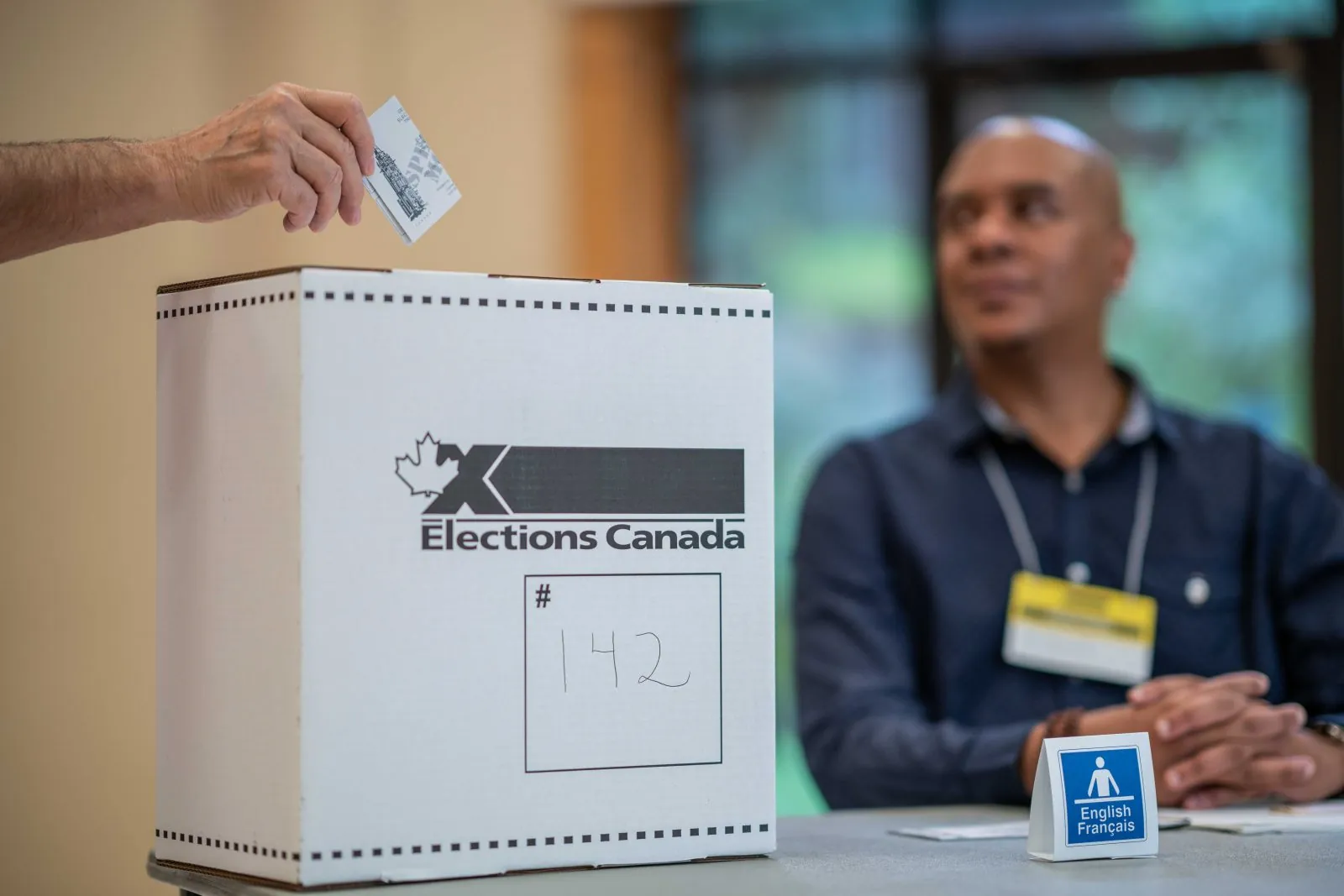
Once a vote is called, provincial election agencies take full control of the process. They regulate the entire referendum period to ensure fairness. The rules are strict. The law dictates that a provincial election agency administers a referendum using the exact same oversight applied to a general election.
In Alberta, the legislation dictates rigid rules for the campaign. The agency manages third-party advertising, sets strict financial contribution limits, and coordinates the deployment of official scrutineers for both the “Yes” and “No” campaigns. Corporations, unions, and political action committees cannot simply spend unlimited funds to sway the public.
Provincial governments remain the primary actors in drafting the questions. A modern example is the Alberta separation referendum scheduled for October 19, 2026. Alberta Premier Danielle Smith introduced the measure. The ballot asks voters if the province should commence the legal process required under the Canadian Constitution to hold a binding provincial referendum on whether or not Alberta should separate from Canada.
When a province attempts to alter its constitutional standing, the federal government becomes an immediate and highly active stakeholder. Provincial referendums concerning constitutional change force a political response from Ottawa. Prime Minister Mark Carney answered the 2026 Alberta proposal by publicly advocating for unity. He pushed for “co-operative federalism” and framed the Canadian federation as a structure undergoing necessary, ongoing “renovations.”
First Nations communities are deeply involved in the constitutional framework. Legal critics and separatist leaders argued fiercely about the phrasing of the 2026 Alberta proposal. They claimed the ballot question was designed specifically to sidestep recent court rulings regarding the province’s duty to consult First Nations communities on constitutional matters.
What’s at Stake
The most heavily contested part of any campaign is usually the wording of the question itself. Provincial electoral laws require that referendum questions be distinctly worded. The goal is that electors can provide a clear, definitive “yes” or “no” answer on the ballot. Vague phrasing leads to legal challenges.
The “Question Clarity” debate happens in almost every major campaign. Critics immediately labeled Alberta’s 2026 proposal a “referendum-on-a-referendum” because of its highly conditional wording. The debate over clarity leads directly to the question of what happens after the polls close. Many wonder how a provincial referendum works under the Canadian Constitution when the vote involves separation.
A “yes” vote does not result in immediate or unilateral separation. The Canadian Constitution does not allow a province to simply declare independence based on a single ballot. Instead, a successful vote acts as a democratic mandate. It authorizes a provincial government to commence the constitutional process for separation. That process involves years of intense legal negotiations with the federal government and the other provinces.
The stakes are just as high for non-constitutional votes. A binding vote on tax reform or electoral boundaries removes decision-making power from elected officials. The result becomes law. This reality forces advocacy groups and financial interests to spend heavily to secure a victory during the regulated campaign period.
Frequently Asked Questions
What is the difference between a referendum and a plebiscite in Canada?
While the terms are often used interchangeably in casual conversation, they have entirely different legal definitions. A referendum asks an electorate to make a direct, legally binding decision on a political question. The government must follow the result. A plebiscite is an advisory or consultative vote. The results of a plebiscite do not legally bind the provincial or federal government to take any action.
How are provincial referendums initiated?
They can start in two distinct ways. Most are initiated from the top down by the provincial legislature. However, they can also start from the bottom up in the four western provinces: British Columbia, Alberta, Saskatchewan, and Manitoba. These provinces have legislation allowing for “Popular Initiatives,” which is a populist petition process driven directly by the public to propose or amend laws.
Can a province separate from Canada immediately after a “yes” vote?
No. A provincial referendum vote does not result in immediate or unilateral separation. Under the Canadian Constitution, a referendum is used as a democratic mandate. A “yes” vote simply authorizes a provincial government to commence the complex legal and constitutional negotiation process required for separation with the federal government.
How are referendum ballots formatted?
Provincial electoral laws require absolute clarity on the ballot, regardless of how complex the underlying political issue is. A referendum question must be distinctly worded so that electors can easily provide a clear, definitive “yes” or “no” answer.