
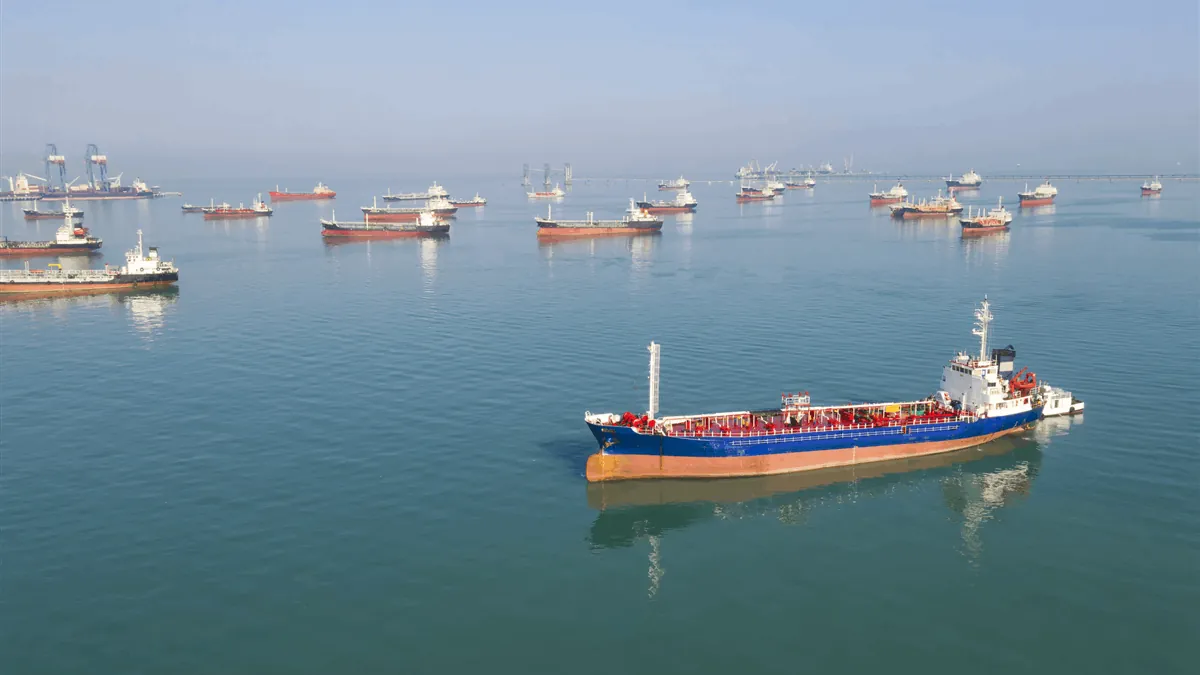
The United States and Iran reached a preliminary agreement on Sunday to wind down the ongoing military conflict in the Middle East and end the blockade of the Strait of Hormuz. The tentative deal follows a war that began on February 28, 2026, when U.S. and Israeli airstrikes targeted Iranian military facilities amid stalled nuclear negotiations.
A senior U.S. official confirmed the “deal in principle” to ease the dual blockades that paralyzed the Persian Gulf. The agreement remains unsigned and is pending final approval from U.S. President Donald Trump and Iran’s Supreme Leader, Ayatollah Mojtaba Khamenei.
Under the proposed terms, the Strait of Hormuz will reopen to commercial shipping, and the United States will lift its naval blockade of Iranian ports. Iran also agreed in a general statement to dispose of its stockpile of highly enriched uranium, currently estimated at over 400 kilograms.
The exact mechanism for this nuclear material disposal remains heavily contested. Trump wants the U.S. to seize the material directly, while Iranian officials deferred specific nuclear negotiations for an additional 30 to 60 days. The diplomatic developments occurred during a tense weekend in Washington, as Trump negotiates the Iran deal following a fatal security incident outside the White House.
The president posted on social media that he instructed his negotiators “not to rush into a deal,” adjusting his earlier claims that an agreement was largely finished.
The reopening of the Strait of Hormuz is expected to relieve the largest supply disruption in the history of the global oil market. The U.S. Energy Information Administration forecast that if shipping traffic resumes in June, international benchmark Brent crude, which closed at $103.54 a barrel on Friday, will average $89 a barrel by the end of 2026.