
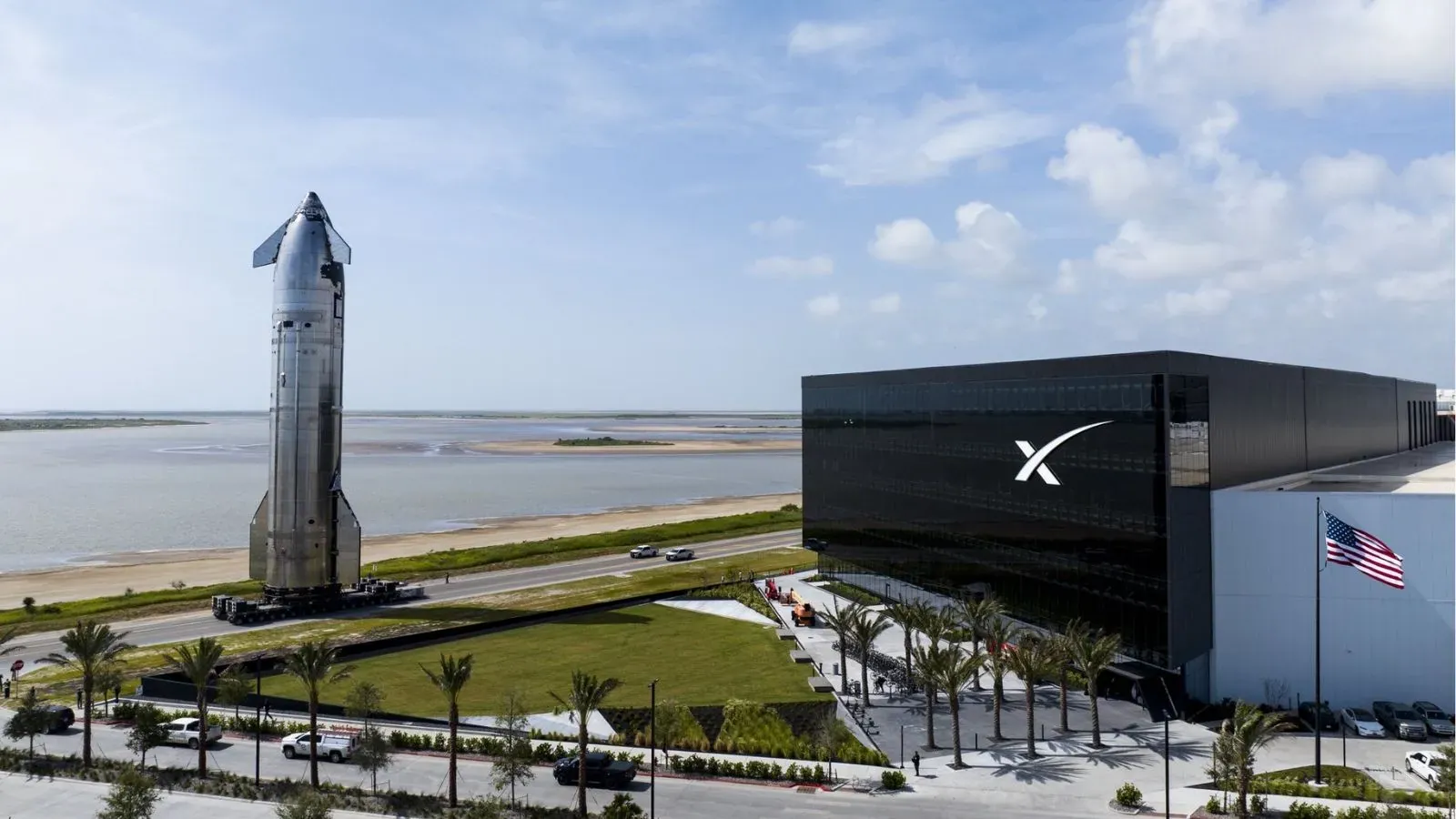
NASA’s Artemis lunar return timeline faces a critical test this week as SpaceX prepares to launch the 12th integrated test flight of its Starship rocket. The mission has been postponed to Friday morning, May 22, 2026, to allow engineers time to conduct final safety checks on the newly designed vehicle. Liftoff is scheduled from the recently redesigned Pad 2 at the company’s Starbase facility in South Texas.
The flight marks the debut of the “Version 3” configuration, breaking a seven-month launch hiatus and standing as the first orbital test attempt of this scale since October 2025. Standing 407 feet tall, four feet taller than previous iterations, the rocket features enhanced Raptor engines and upgraded thermal protection tiles, according to Indian Express coverage detailing the debut of Pad 2’s upgraded infrastructure and the deployment of Starlink simulator satellites.
Flight 12 Trajectory and Ocean Splashdowns
For this iteration, the Super Heavy booster, designated Booster 19, will not attempt a mechanical catch at the launch tower. Flight controllers are instead targeting a controlled landing burn and a splashdown in the Gulf of Mexico.
The upper stage, Ship 39, is tasked with executing a Raptor engine relight in the vacuum of space while deploying roughly 22 Starlink simulators. It will then test its heat shield durability during reentry before a planned splashdown in the Indian Ocean.
How the $2.9 Billion Artemis Contract Drives SpaceX’s Testing Cadence
The immediate pressure behind SpaceX’s aggressive launch schedule is tethered to its $2.9 billion Human Landing System (HLS) contract with NASA. The space agency relies heavily on a modified lunar-landing variant of Starship to successfully return astronauts to the Moon. Any developmental delays in Starship’s orbital readiness directly force NASA to push back its Artemis mission timelines.
SpaceX relies on a rapid hardware iteration methodology to accelerate development, utilizing the data from these test flights to refine the next vehicle. CEO Elon Musk requires full, rapid vehicle reusability to lower spaceflight costs, a fundamental physical requirement for the company’s long-term goal of building a self-sustaining human settlement on Mars.