
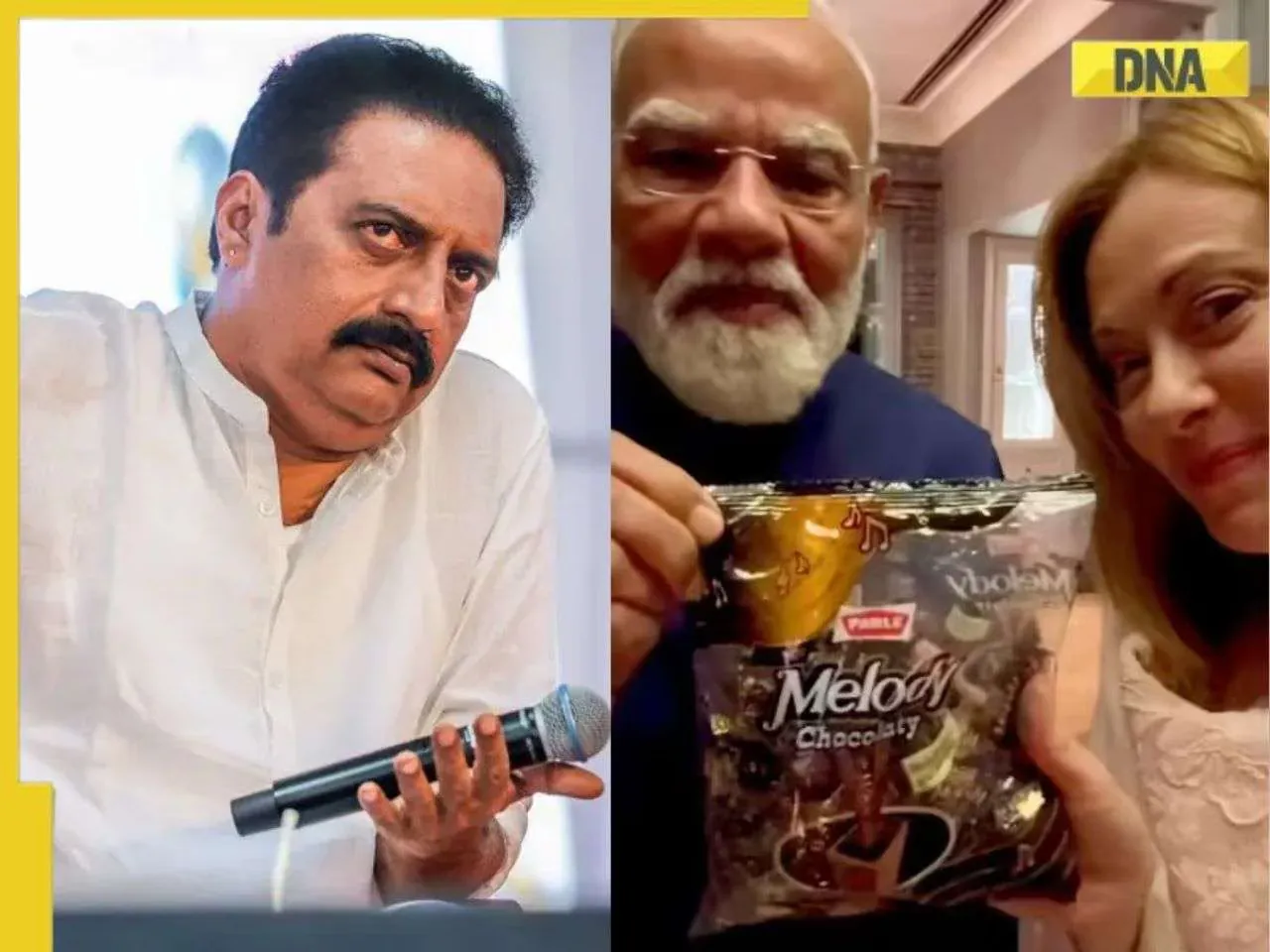
Prime Minister Narendra Modi used his May 20 diplomatic tour of Italy to deepen bilateral relations with a highly specific cultural export, handing Italian Prime Minister Giorgia Meloni a packet of Parle Melody toffee. The exchange immediately went viral online under the recurring “#Melodi” hashtag, placing a privately held Indian FMCG brand on a global stage. The incident starkly highlights the financial trajectory of Parle Products, a company founder Mohanlal Chauhan started in 1928 with a Rs 75,000 investment inside a decrepit Vile Parle cattle-shed. Today, the Chauhan family controls a consumer goods empire with an estimated net worth of Rs 78,000 crore.
The impromptu gift generated unprecedented free marketing exposure that media analysts calculate would traditionally cost tens of crores if brokered through global icons like Shah Rukh Khan or Cristiano Ronaldo. Meloni quickly posted a video of the interaction to her social media accounts, explicitly calling the candy a “very, very good toffee.” The video sparked an immediate supply chain shock in India, leading to widespread stock-outs of Melody packets across major quick-commerce platforms.
The financial fallout hit the Bombay Stock Exchange in a highly unusual way. Retail investors rushed to capitalize on the viral moment and mistakenly flooded orders into “Parle Industries”—an entirely unrelated company dealing in real estate and paper trading—sending the stock to hit its 5% upper circuit limit in early trading hours. Parle Products itself remains a privately held entity and cannot be traded on public exchanges.
Corporate executives scrambled to address the sudden spike in national demand. The surge prompted public acknowledgment of the logistical bottleneck, according to statements from Parle Products Vice President Mayank Shah detailing sudden inventory drain. The company’s digital marketing team capitalized on the event hours later by posting the tagline “Sweetening relationships since 1983,” referencing the exact year the Melody brand launched.
The “#Melodi” internet phenomenon originally gained traction during the COP28 summit in Dubai in late 2023. This week’s interaction in Italy formalized the meme into a direct corporate windfall, effectively bypassing traditional international advertising channels.
The Rising Threat of Meme-Stock Identity Confusion
The accidental surge of Parle Industries stock highlights a growing vulnerability in retail investing: identity confusion driven by algorithmic trading and social media virality. As global leaders and corporate executives increasingly leverage casual public appearances, retail investors attempt to front-run the anticipated consumer demand without verifying corporate structures.
This exact pattern disrupted Asian markets in late 2025 when photos of Nvidia CEO Jensen Huang eating at a local South Korean restaurant caused unrelated regional poultry stocks to temporarily jump by up to 30%. Retail traders search for recognizable nouns and buy the first matching ticker symbol they see. For private giants like Parle Products, the true financial gain remains locked inside private revenue streams, while public markets absorb the chaotic retail speculation.
The quick-commerce inventory collapse also exposes the fragility of localized FMCG distribution networks. Modern 10-minute delivery services operate on strict predictive algorithms based on historical neighborhood purchasing data. When a geopolitical event suddenly drives an obsolete 1980s candy brand to peak virality, these hyper-local dark stores empty within hours, lacking the buffer inventory required to absorb global internet trends.