
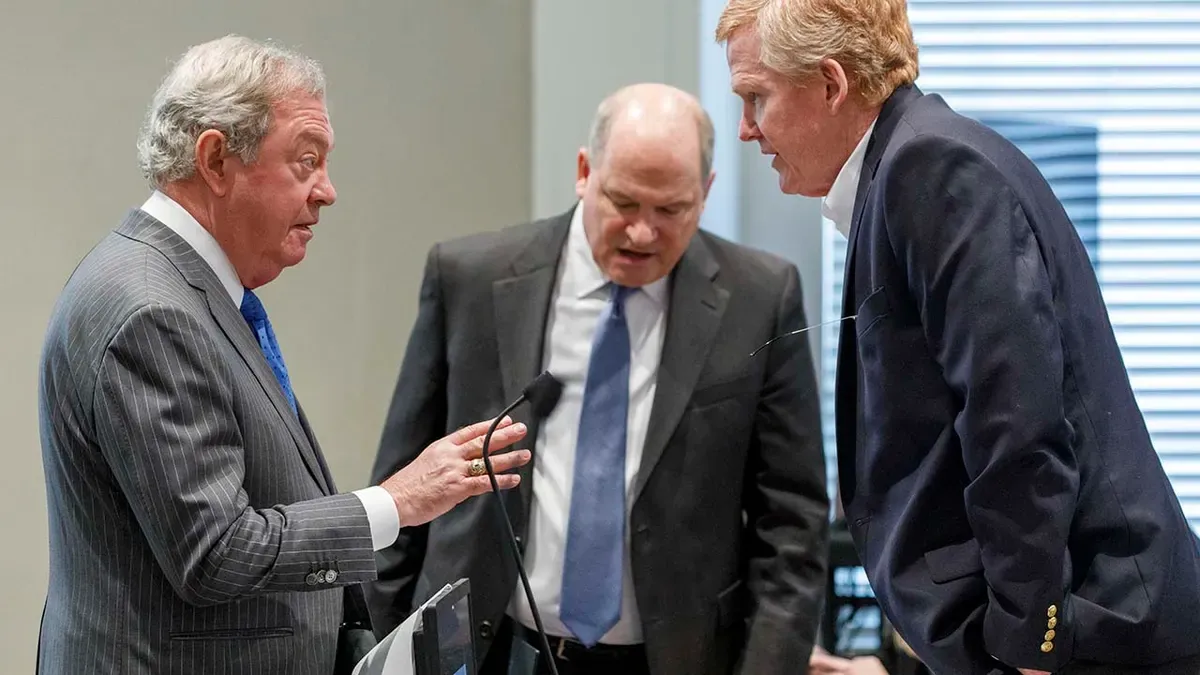
The South Carolina Supreme Court issued a unanimous decision on May 13, 2026, to overturn the murder convictions of disgraced former attorney Alex Murdaugh. This high-profile judicial reversal comes as the domestic world of American law faces intense public scrutiny over the integrity of jury trials amidst a period of significant national and global political instability. The 5-0 ruling effectively nullifies the 2023 verdict that found Murdaugh guilty of the 2021 killings of his wife, Maggie, and son, Paul, at their Moselle estate.
The justices ordered a new trial after determining that Rebecca Hill, the former Colleton County Clerk of Court, improperly influenced the jury during the original six-week proceedings. According to the South Carolina Supreme Court ruling, Hill “placed her fingers on the scales of justice” by making comments to jurors that suggested they should not be misled by Murdaugh’s testimony. The court found these private communications violated Murdaugh’s constitutional right to an impartial jury. Additionally, the court noted that the trial judge permitted an excessive amount of testimony regarding Murdaugh’s financial crimes, which potentially created an unfair prejudice against him in the murder case.
Despite this legal victory, Murdaugh will not be released from custody. He is currently serving a 40-year federal prison sentence for financial fraud and a concurrent 27-year state sentence for related crimes, including the theft of millions of dollars from his former law firm and clients. State authorities have already signaled their intent to move forward with a second murder trial. South Carolina Attorney General Alan Wilson confirmed that prosecutors will once again retry the double-murder case to seek justice for the victims.
Legal analysts suggest this ruling establishes a rare and significant precedent regarding the conduct of court officials. While many convictions are appealed on the basis of evidence or judge error, it is exceptionally uncommon for a verdict of this magnitude to be vacated specifically because of a court clerk’s direct interference with a jury’s deliberation process. This decision essentially resets the clock on one of the most-watched criminal sagas in South Carolina history, highlighting a systemic need for absolute jury isolation in the digital and high-pressure era of 2026. The upcoming retrial will likely face increased logistical challenges as the state attempts to seat a new, untainted jury in a case that has already saturated global media coverage for years.