
Norway just marked a major step forward for the environment. The nation successfully injected and stored carbon dioxide (CO₂) deep under the North Sea. These first volumes of CO₂ now rest in the Aurora reservoir, sitting 2,600 meters below the seafloor. This achievement signals the start of the world’s first facility designed to transport and store CO₂ for other companies. It opens a new chapter in how we tackle industrial emissions.
The Northern Lights project, located in Øygarden, Norway, is the powerhouse behind this effort. Its carbon capture and storage (CCS) facilities began the process of locking away CO₂ at that incredible depth. This system is crucial for industries that are hard to electrify, such as cement, steel, and urban waste management. It offers a new path for these heavy polluters to clean up their act.
The CO₂ comes from the Heidelberg Materials cement factory in Brevik, Norway. There, the CO₂ is captured, turned into a liquid, and then shipped to Øygarden. From the coast, it flows through a 100-kilometer pipeline that runs under the sea. This pipeline leads to the Aurora geological reservoir. The CO₂ is then permanently trapped in a deep saltwater layer, where it cannot escape.
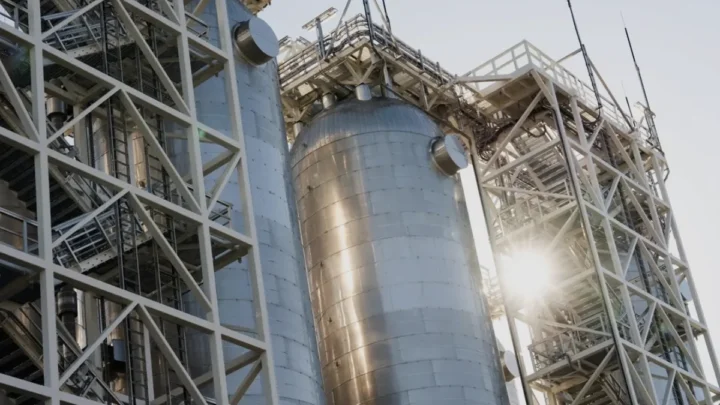
This isn’t a mere experiment. It’s a fully operational system reducing greenhouse gases in Europe. In its first phase, Northern Lights can store 1.5 million tons of CO₂ each year. This capacity is already fully booked. It’s like taking over 320,000 private cars off the road every year. This pioneering project offers a complete chain from capturing to storing carbon. It’s also open to industries from many different countries.
Leading energy companies like Equinor, Shell, and TotalEnergies are part of this venture. Their involvement shows the project’s technical and financial strength. The Norwegian government also provided significant support, covering about 80% of the first phase’s costs. This crucial backing made the project possible.

With CO₂ injection now underway, Northern Lights is moving into its second phase of expansion. This will boost its capacity to store at least 5 million tons of CO₂ per year. The project recently sealed a deal with Stockholm Exergi. This will bring up to 900,000 tons of CO₂ from Sweden annually. The expansion includes building a new pier, adding more onshore storage tanks, and digging new injection wells. These new parts will connect to the existing setup. In summer 2025, nine new CO₂ tanks were delivered to Øygarden, showing the rapid pace of this development.
The European Union strongly supports this growth. It awarded 131 million euros through its Connecting Europe Facility for Energy program. This funding highlights how important carbon capture and storage is for Europe’s climate goals. It also paves the way for a cross-border system to reduce emissions. The Northern Lights project is part of Norway’s larger “Longship” program. This program aims to develop large-scale carbon capture and storage across the country.
What makes Northern Lights a true model is its open approach. Any company producing CO₂ can use this infrastructure, as long as they meet the technical standards. This shared platform cuts down costs for smaller businesses. It removes the need for each company to build its own storage. This “democratic” method of decarbonization helps speed up global efforts. It’s an essential step toward reaching the goals set by the Paris Agreement. This system could become a blueprint for cleaner industries worldwide.