
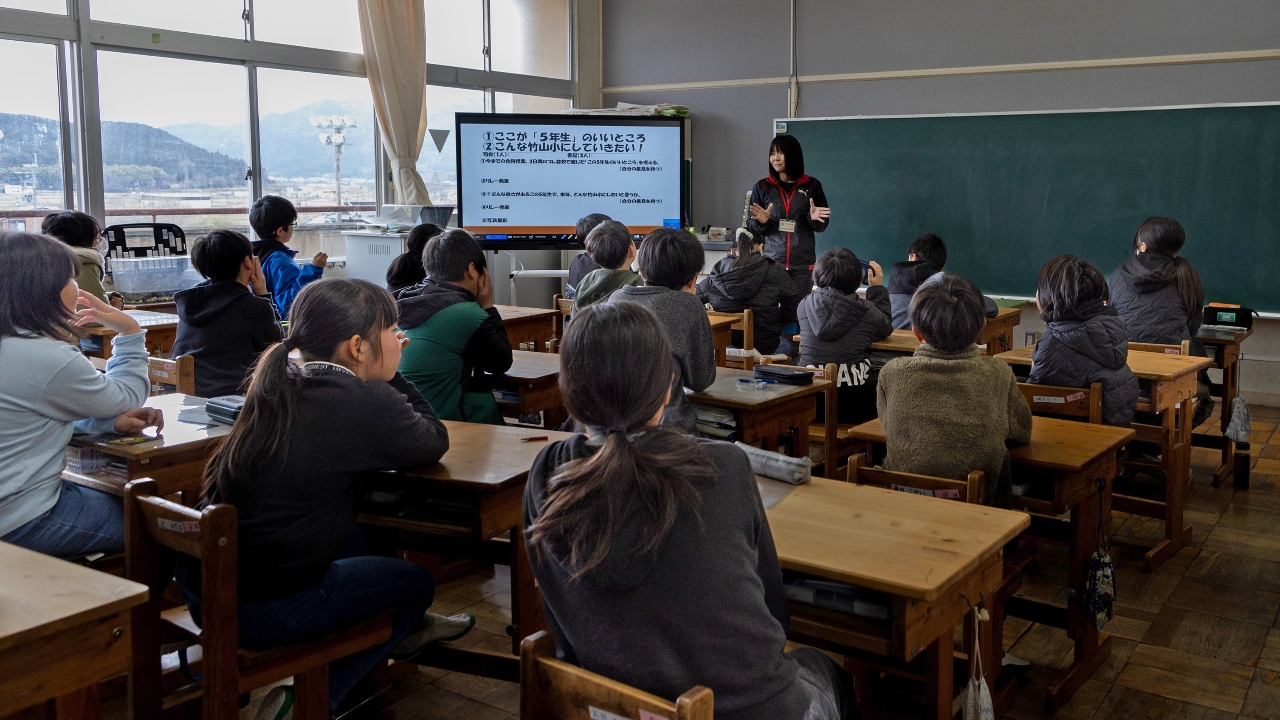
Teachers around the world dedicate countless hours to shaping young minds. Yet, a recent international study highlights a particularly tough situation for educators in one nation. New data shows that teachers in Japan continue to shoulder the longest workweeks. This trend holds true across the Organisation for Economic Co-operation and Development (OECD) member countries and other regions studied.
The latest Teaching and Learning International Survey (TALIS) from the OECD, released on October 7, paints a clear picture. Japanese teachers have consistently topped the list for work hours since the last survey in 2018. Their workweek averages more than 10 to 14 hours longer than the global average. This includes extra tasks done in the evenings and on weekends, often unseen by others.
Specifically, primary school teachers in Japan put in an average of 52.1 hours each week. For those teaching at the lower secondary level, the number climbs to 55.1 hours weekly. While these figures represent a small drop of about four hours per week since the previous survey, they remain much higher than international norms. The global average stands at 40.4 hours for primary teachers and 41.0 hours for lower secondary educators.
The deep dive into these work hours reveals where the extra time goes. Japanese teachers spend a lot more time on non-classroom activities and administrative duties. For instance, lower secondary teachers in Japan spend 5.6 hours on extracurricular activities. This is significantly higher than the global average of 1.7 hours. Similarly, administrative tasks consume 4.5 hours for primary teachers and 5.2 hours for lower secondary teachers in Japan. The international averages for these tasks are 2.7 and 3.0 hours, respectively.
Officials from Japan’s Ministry of Education acknowledge these long hours. They suggest that the nation’s broad approach to education might contribute. This approach focuses on developing not just knowledge, but also morals and physical health. Such a comprehensive system naturally adds to the teachers’ responsibilities.
Beyond the heavy workload, the survey also points to another major challenge: a shortage of teachers. Many school leaders identified this as a key barrier to providing quality education. Over 40% of primary school principals reported teacher shortages. This figure has more than doubled since the last survey. About 35% of lower secondary principals also cited a lack of teachers. These numbers are more than ten percentage points higher than the international averages.
Despite these significant hurdles, the Ministry of Education believes its reform efforts are heading in the right direction. They have stated a strong commitment to addressing the teacher shortage problem. It remains a critical issue that demands serious attention.
Source: THE MAINICHI