
A demonstration of future travel took an unexpected turn in Changchun, northeast China, recently. Two flying vehicles, developed by Xpeng AeroHT, collided in mid-air during a practice run for an airshow. The incident brought a stark reminder of the challenges that still face emerging technologies.
Initial reports from the company stated everyone was safe. However, news outlets like CNN, citing company sources, later reported one person suffered injuries. The scene quickly became chaotic as one of the flying cars caught fire after landing. Emergency crews, including firefighters, rushed to the site to put out the blaze.
Online videos from Weibo, a popular Chinese social media platform, showed the wreckage on the ground engulfed in flames. Firetrucks were visible working to control the situation. Xpeng confirmed one vehicle had fuselage damage and caught fire. Local officials responded quickly to manage the emergency. The exact cause of the collision remains unknown as investigations continue.
Xpeng AeroHT is a division of Xpeng, a significant player in China’s electric vehicle market. The company has been at the forefront of developing these vertical take-off and landing (VTOL) vehicles. Each flying car is priced around $300,000 USD, which is roughly 11 million Thai Baht. Back in January, Xpeng announced it had already received an impressive 3,000 pre-orders for these futuristic machines.
China is actively pushing to expand its influence in flying car technology. The nation hopes to repeat the global success it has seen with electric cars. It has set a goal to become a world leader in the “low-altitude economy,” which includes these innovative aerial vehicles.
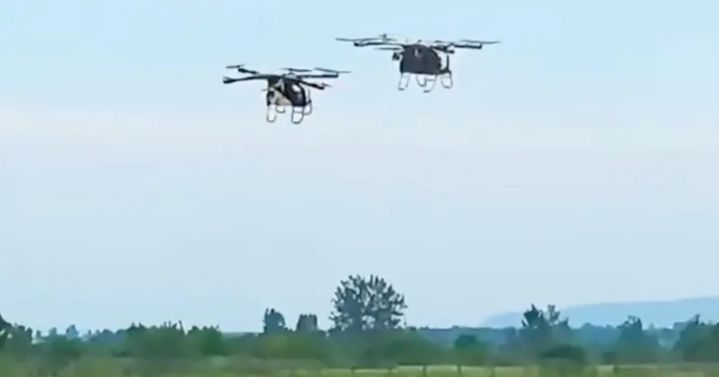
Despite the rapid advances, experts continue to highlight major hurdles for flying cars. Building the necessary infrastructure is a huge task. Clear rules and regulations are also missing. Perhaps most importantly, the public needs to fully accept these new modes of transport. Incidents like the one in Changchun show that the journey to widespread flying car adoption is still very much in its early, challenging stages.
Source: BBC