
Netflix has a new hit series called Las Muertas, and it’s making waves. This show is the first time director Luis Estrada is working in television. He’s known for his sharp movies. For this series, he takes a dark and funny look at one of Mexico’s most famous true crime stories: the case of the Poquianchis sisters.
Estrada doesn’t just tell the story; he digs deep into what it means. In a recent chat reported by a prominent entertainment outlet, he spilled some secrets. He talked about how he brought the story to life and why certain scenes are so important. He also shared insights into the dark humor used in the original book. And there’s a big mystery: a character who pops up now and then, but we never know their name. This person connects the whole story and even talks directly to the audience. Their identity is a secret until the very end of Las Muertas. Estrada even called some of these reveals "spoilers."
A Shout from the Balcony: A Political Jab
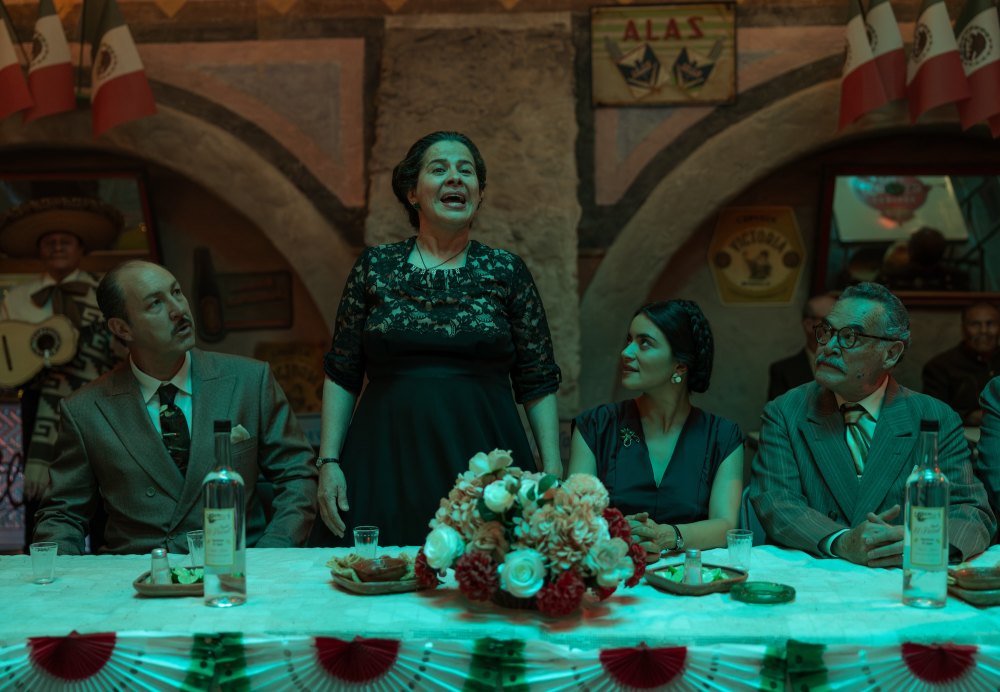
One scene that really hits hard is a shout from a brothel balcony. It’s meant to remind viewers of how politicians sometimes give speeches on Mexico’s Independence Day. Estrada says this scene perfectly blends the characters’ despair with official corruption. He calls it his "personal touch of political satire." He believes that exaggeration and fakery are deeply rooted in Mexican culture, where terrible social issues often get turned into a show. This scene, kept under wraps until now, is one of those moments Estrada prefers audiences to figure out on their own.
The Vulture on the Cactus
Another striking image in Las Muertas is a vulture perched on a cactus, eating a snake. This isn’t just a pretty shot. Estrada designed it as an "anti-national emblem," a sharp comment on corruption and the rot within institutions. He firmly believes that art should make people think. "I prefer each viewer to find their own meaning," he said. "No two people see the same movie or show. This image is there to provoke, not to be explained like a manual."
*¡Alarma!* and the Power of Sensationalism
The director also touched on how the tabloid newspaper ¡Alarma! played a huge part in the Poquianchis case. This weekly paper turned the crime into a massive media event. Before the case, it sold about 15,000 copies a week. Once it started covering the Poquianchis, sales shot up to over a million. The paper got people hooked by stretching the truth and making things sound more dramatic.

Estrada pointed out that this kind of "yellow journalism" changed everything. "They discovered that the more they twisted facts, the bloodier the headlines, the more they sold," he explained. This media circus was a key reason why Jorge Ibargüengoitia wrote his novel, and why Estrada felt compelled to bring it to the screen. To this day, ¡Alarma! remains a case study in journalism schools. It’s not a model to follow, but it shows how powerful media can be.
Jorge Ibargüengoitia Breaks the Fourth Wall
Remember that mysterious character who seemed to just float through the show? Estrada revealed that this shadowy figure, whose face is barely shown in all six episodes, is actually Jorge Ibargüengoitia himself. He’s the talented author of the original book Las Muertas.
Bringing Ibargüengoitia into the series felt completely natural to Estrada. The writer often worked between journalism, legal reports, and creative writing. Estrada wanted to honor him by making him a sort of ghostly presence. The director explained that the way the novel was written almost demanded this kind of presence. It’s a tribute to Ibargüengoitia, who, like Estrada and his team, deeply researched the real-life González Valenzuela sisters. Estrada hoped that fans of the book would recognize the author’s voice in the series. He also wanted the show to make new viewers curious enough to pick up the book.
Estrada, who is 62, sees this clever nod as a bridge between literature and the small screen. He stressed that it wasn’t about softening the story’s harshness. Instead, it was about reminding viewers that satire can hit just as hard as a direct accusation. In fact, since the Netflix series came out, Ibargüengoitia’s book has been re-released. Its new cover proudly features a promotional photo from Estrada’s show.
Luis Estrada’s Mark on Cinema
Luis Estrada is no stranger to taking on politics. For three decades, his movies have been known for their biting humor and unflinching views. His famous works include Herod’s Law (1999), A Wonderful World (2006), Hell (2010), The Perfect Dictatorship (2014), and Long Live Mexico! (2023). Just like Las Muertas, all these films use satire to pull back the curtain on power in Mexico.
With Las Muertas, Estrada masterfully balances the brutal truth of the real case with the sharp, mocking wit that defines his work. "What interests me is for the viewer to laugh, be outraged, and think at the same time," he shared.
You can stream Las Muertas on Netflix. It first arrived on the service on September 10th.