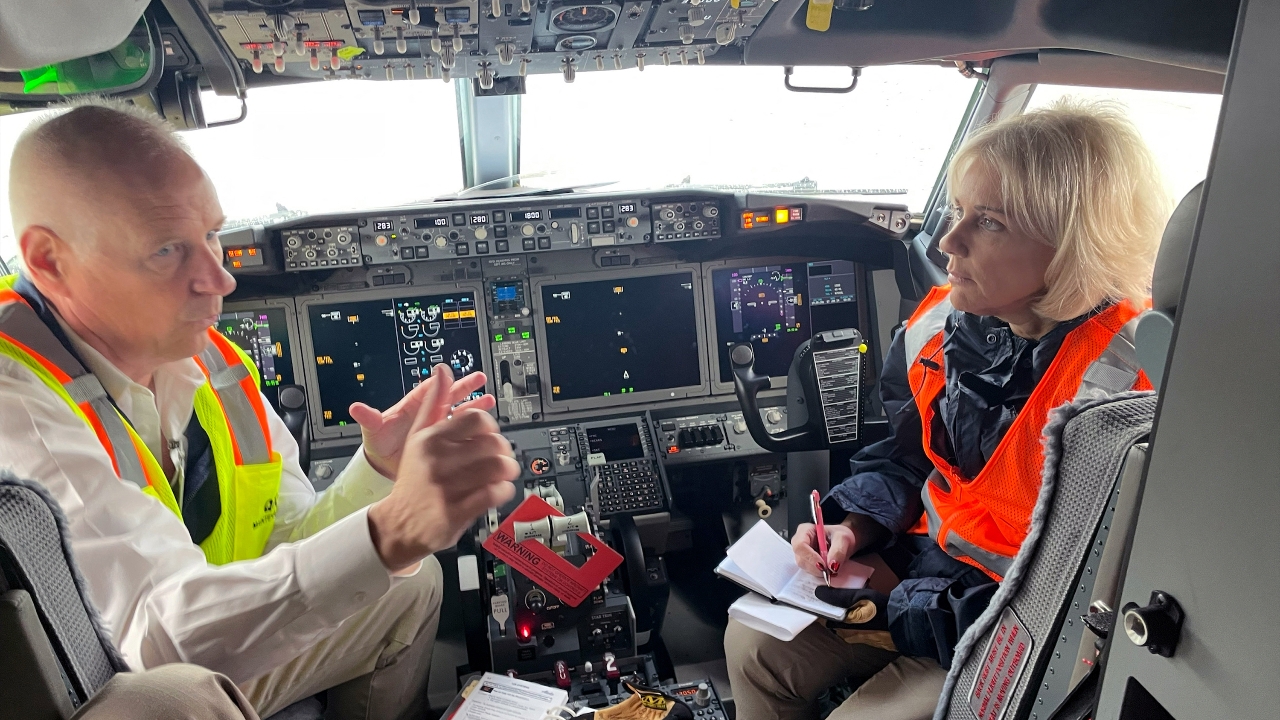
Across the globe, airlines are now inspecting a vital part of their aircraft: the fuel control switches on Boeing planes. This urgent review follows a deeply concerning report. Investigators are trying to understand why an Air India flight crashed, killing 260 people.
The preliminary findings from Indian air accident officials are unsettling. They suggest that the fuel cutoff switches on both sides of Air India Flight AI171 were moved to the “off” position. This happened almost at the same time, shortly after the plane took off from Ahmedabad and was climbing into the sky. A chilling detail from the cockpit voice recorder shows one pilot asking another, “Why did you cut fuel?” The reply was, “I didn’t.” This exchange hints at a serious mystery, perhaps an accident or a mechanical issue.
Boeing, the company that makes these planes, and the United States’ aviation safety body both say the fuel system is safe. However, back in 2018, the U.S. Federal Aviation Administration (FAA) did suggest something. They advised airlines to check the locking parts on these fuel cutoff switches. The idea was to stop them from being moved by mistake. But this was only a suggestion, not a mandatory rule.
This latest incident adds more pressure on Boeing. The company has faced ongoing questions about safety with its 737 MAX and 787 Dreamliner models in recent years. After the Air India crash, aviation authorities in India ordered checks across all airlines using Boeing 787 and 737 planes. These models are very common in Asia. South Korea also told its airlines to quickly inspect their Boeing fleets.
Many airlines around the world have already started looking at their planes. Singapore Airlines and its budget carrier Scoot quickly checked their aircraft and reported no problems. Lufthansa, a German airline, had checked its planes in 2018 and did another check after the Air India crash. Qantas, from Australia, also confirmed its planes were checked.
Other major airlines are currently in the middle of their checks. Korean Air, ANA, and Japan Airlines are all working on these inspections. Meanwhile, EVA Air in Taiwan stated it had not yet received new orders to check its planes. Alaska Airlines in the United States also confirmed it had not received any fresh advice from Boeing on this matter. The focus on these small but critical switches shows how one tragic event can ripple through the entire world of air travel, making everyone think about safety again.