
In the last five years, e-commerce has not stopped breaking sales records year after year. However, this does not mean the end of shopping in traditional stores, rather both complement each other to adapt to consumer preferences. In this context, Packlinkthe leading logistics solutions platform, has released a new report titled “Online shipping scenario 2024“What that reveals 48.5% of online purchases in Spain involve some type of interaction with the physical store.
This proportion corresponds Electronic commerce generates 10,691 million euros in sales when it interacts with the physical environment. Actually, 76% of Spaniards combine purchases through both channels, making our country the second highest percentage in Europe, behind only the United Kingdom. Thus, omnichannel behavior is the most common among consumers today, with only 13% buying exclusively in physical stores and 11% only buying online.
These results are compounding the relevance of omnichannel commerce, which better meets consumer expectations and needs. So, Three out of four shoppers in Europe use both channels to make the same purchase. This involves, for example, discovering products online and purchasing them in-store, or placing an order online but returning it in-store. In this sense, 39% of Spaniards search for products online but make the purchase in a physical store20% buy the products online but choose to have them shipped to a store.
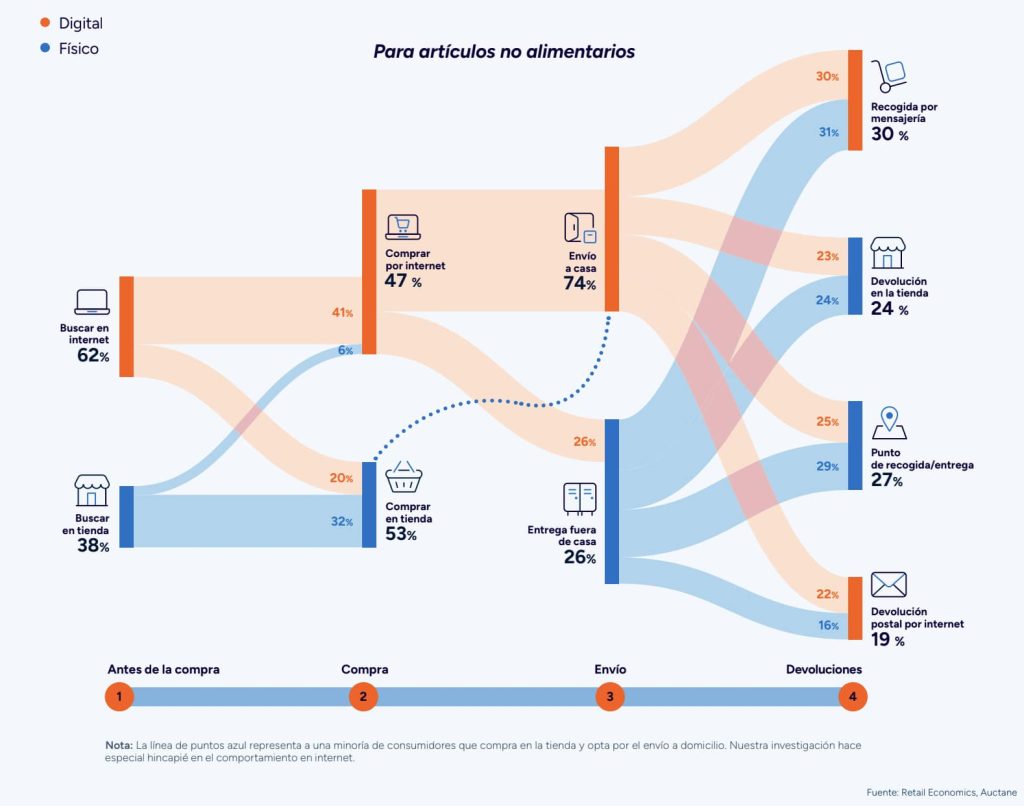
The online trend continues to grow
However, electronic trading continues to be on the rise in the Spanish market. In fact, it’s the trend that’s growing the most this year. So, 28% of respondents say they will increase their online searches and purchases, while 52% will remain the same proportion as before. On his part 56% of consumers will remain loyal to traditional retail. For their part, 21% of Spaniards will increase their searches and purchases in a physical store.
“Despite the continued growth of e-commerce, traditional shopping remains highly relevant. In fact, consumers always want to be able to choose which options best suit their needs. “It is therefore important that retailers offer a variety of purchase, delivery and return options that support omnichannel commerce.” mention, that Noelia Lázaro, Marketing Director of Packlink.
Marketplaces on the Internet, the key to research
Most customer journeys start on the internet. Nine out of ten (87%) consumers regularly use internet platforms to search and research productswith search engines and marketplaces being the most popular destinations.
Today, many marketplaces are very sophisticated in offering relevant product recommendations to buyers. This sophistication often saves customers valuable time searching and comparing products because it does not require visiting numerous websites. Therefore, sellers can benefit from the investments and complex infrastructure that marketplaces offer to give visibility to their products.
For Generation Z and Y (Millennials), Digital Natives, For purchasing inspiration and product discovery, social media is considered more important than a seller’s own website.. As the use of digital products continues to increase, consumers are spending more and more time browsing and exploring products. In the UK, the typical shopper spends around four hours a week researching and discovering products – 1.5 days more per year compared to pre-pandemic habits.