
Just like a car or a house, the rate at which parts of our body deteriorate varies from one to another. A study conducted with 5,678 people led by researchers at Stanford Medicine (Stanford University, USA) has shown that our organs age at different rates, and if the age of one organ is particularly advanced compared to that of its counterpart in other people of the same age, the person carrying it is at a higher risk of suffering both diseases associated with this organ and dying from it.
According to the study, one in five reasonably healthy adults aged 50 and over has at least one organ that ages very quickly.
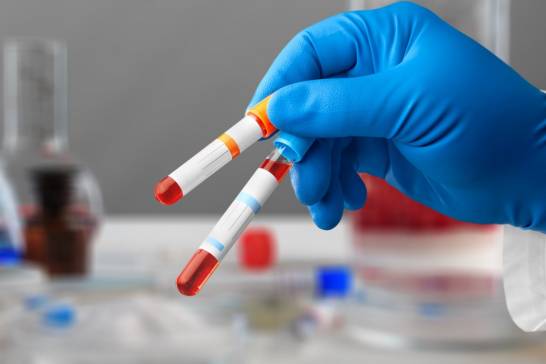
The results of the Stanford team’s work, now published in Nature, show that a simple blood test allows us to identify which organs in a person’s body, if any, are aging rapidly, thereby guiding therapeutic interventions long before clinical symptoms become manifest.
“We can estimate the biological age of an organ in an apparently healthy person,” explains the first author of the study, Tony Wyss-Coray, professor of neurology at the American institution. “This in turn predicts the risk of suffering from a disease associated with that organ.”
We can estimate the biological age of an organ in a seemingly healthy person. This, in turn, predicts the risk of suffering from a disease related to this organ.
Biological age vs. chronological age
“Numerous studies have presented single numbers that represent individuals’ biological age – the age implied by a sophisticated set of biomarkers – compared to their chronological age, that is, the actual number of years since birth,” explains Wyss-Coray.
The new work went one step further and obtained different numbers for each of the 11 key organs, organ systems or tissues: heart, fat, lungs, immune system, kidney, liver, muscle, pancreas, brain, vascular system and intestines.
“When we compared the biological age of each of these organs for each individual with those of a large group of people without obvious serious illnesses, we found that 18.4% of those over 50 had at least one organ that was aging significantly faster than average,” says Wyss-Coray. “And we found that these people are at higher risk of diseases of this particular organ over the next 15 years.”
Only one of 60 people in the study had two organs aging so quickly. But according to Wyss-Coray, “they had a 6.5 times higher risk of death than someone without significantly aging organs.”
Proteins and AI
The team leveraged technologies available on the market and a self-designed algorithm to determine the levels of thousands of proteins in people’s blood. The researchers found that nearly 1,000 of these proteins come from one organ or another and established a connection between the abnormal levels of these proteins and the accelerated aging of the corresponding organs and their susceptibility to disease and mortality.
To do this, they trained an AI machine-learning algorithm to accurately guess people’s ages based on their levels of 5,000 proteins. The algorithm selected the proteins that best correlate with a trait of interest (in this case, accelerated biological aging in a person or a particular organ) by asking in turn: “Does this protein increase the correlation?”
The scientists tested the algorithm’s accuracy by evaluating the ages of another 4,000 people who were reasonably representative of the U.S. population.
They then used the proteins they identified to focus on each of the 11 organs selected for analysis. This involves measuring the level of specific proteins for each organ in each individual’s blood.
Although there was a certain synchronicity between the different organs in a person’s body, each of them went its own way in the aging process.
Age difference between organs
For each of the 11 organs, Wyss-Coray’s team determined an “age difference”: the difference between their actual age and their estimated age, based on the algorithm’s calculations for specific proteins of each organ.
The researchers found that age differences found in 10 of the 11 organs studied (with the sole exception of the intestine) were significantly associated with the risk of death from any cause over a 15-year period.
Having an organ with accelerated aging (defined as an algorithm-assessed standard deviation of the organ’s biological age that is several times greater than the group mean for that organ in people of the same chronological age) carries a 15% to 50% higher risk of mortality in the following 15 years, depending on the organ affected.
According to the study, people with accelerated cardiac aging but who did not initially have active disease or clinically abnormal biomarkers had a 2.5 times higher risk of heart failure than people with normal cardiac aging.
“Old” brains were 1.8 times more likely to experience cognitive decline within five years than “young” brains. Accelerated aging of the brain or vascular system – both – may predict the risk of Alzheimer’s disease progression just as well as the best clinical biomarkers currently used, the authors say.
“If we can reproduce this finding in 50,000 or 100,000 people,” says Wyss-Coray, “monitoring the health of specific organs in apparently healthy people will allow us to detect rapidly aging organs and treat patients before they get sick.”
Identifying the specific proteins of each organ that best indicate excessive organ aging and therefore high risk of disease could also lead to new drug targets, he points out.
Patent and founding a company
Wyss-Coray founded a company with co-authors Hamilton Oh and Jarod Rutledge, Teal Omics, to explore the commercialization of their findings. Stanford University’s Technology Licensing Office has filed a patent application for this work.
Researchers from the University of Washington, University of California, San Francisco, Albert Einstein College of Medicine and Montefiore Medical Center also collaborated on this work.
The study was funded by the National Institutes of Health, the Stanford Alzheimer’s Disease Research Center, the Michael J. Fox Foundation, the Milky Way Research Foundation and Nan Fung Life Sciences.
Reference:
Hamilton Oh, and Jarod Rutledge et al. “Signatures of organ aging in the plasma proteome track health and disease” Nature (December 2023).