
The next smartphones that will hit the market for xiaomi You can count on a new kind of fingerprint scanner that takes up your entire screen. It is all due to the new solution patented by Chinese technology that can improve the precision and ease of unlocking by means of the sensor built into the screen.
In fact, the aforementioned technology will allow the incorporation of a fingerprint reader on the entire useful surface of the screen. In this way, the entire front area will be able to detect, as well as recognize and authenticate our fingerprints to unlock the mobile device more quickly, in addition to authenticating operations.
On a personal note, this is one of the biggest problems with Android smartphones that have a built-in screen reader. Compared to the “old” readers, implemented on the back or side of the smartphone, the unlocking speed is not the same, nor is its accuracy. Also, we ended up leaving the. dirtiest screen with fingerprints, for example.
Xiaomi’s patent promises to improve the way we unlock smartphones
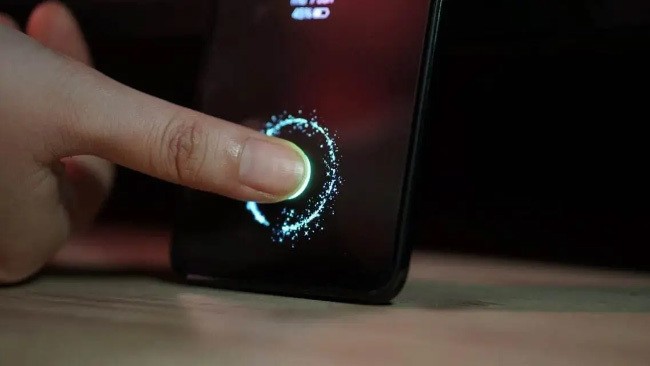
Currently, we have to resort to a specific area or zone of the screen to place the finger. This is precisely what can change with the patent filed by Xiaomi, with the entire screen being able to perform this function.
It should be noted, by the way, that Huawei also filed a similar patent in August 2020, applying it to various markets such as Europe, China and the United States.
On the other hand, we remind you that Qualcomm has also made several developments in this area, as we recently reported in 4gnews.
The entire screen of Xiaomi smartphones will be able to recognize fingerprints

The patent was submitted to the competent Chinese database on January 4 and shows a technology that will work through infrared LEDs. Therefore, you will have emitters and reflectors built into the capacitive layer of the screen.
In practice, LED transmitters will detect the fingerprint through the capacitive layer of the screen without changing the image presentation on AMOLED displays. The infrared receivers will then register and compare the scanned fingerprint pattern with the registered and authenticated pattern.
Finally, after this data processing, the device will be unlocked or not depending on the specific case.
Only the part of the screen where you place your finger will light.

To save battery life and the user’s eyes, the technology provides selective illumination of the area of the screen where the user places their finger for authentication. In this way, when it recognizes the pressure, when it is locked, the phone will activate the infrared LEDs and the entire fingerprint recognition system.
Thus, the rest of the screen will remain off, conserving battery power and not disturbing the reader. A possible analogy for this system would be a Face ID system, similar to Apple’s, but applied to the screen, not to recognize faces, but the unique patterns of our fingerprints.
Finally, keep in mind the high improbability that this technology will be implemented soon on Xiaomi smartphones. However, we will continue to monitor the Chinese manufacturer’s plans for this important technology.