
Following in Apple’s footsteps and with the intention of increasing user privacy on the Play Store, Google has announced the addition of a new Data Security section to all apps.
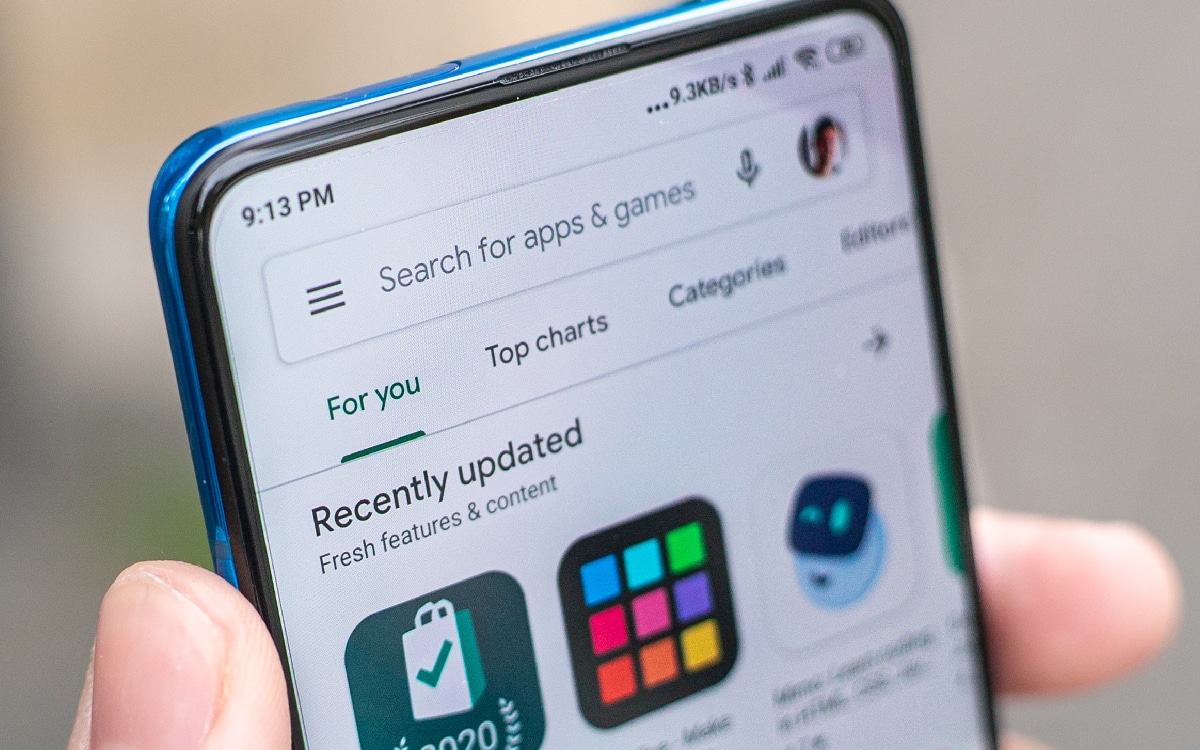
The Mountain View giant has announced that its new section on data security will be available on the Play Store from February 2022. App developers are therefore now required to complete a digital form with relevant information on how their apps use and collect user data.
The “Data Security” form has started to be distributed to some developers as of today and should be accessible to all in the coming weeks. Google has therefore followed in Apple’s footsteps by announcing a strategy similar to the App Store, aimed at bringing more transparency to the applications available on the Play Store.
To read also Google sues Epic Games for breaking Play Store rules
The applications will give you more details about the data collected
On the user side, those who want more information on the data collected by the applications on the Play Store can go to the “About this application” section. The section highlights the data that an application collects and shares, and indicates whether the data is encrypted as it passes, whether it can be deleted, whether it adheres to the Family policy, or whether it has been independently reviewed.
This new section should therefore be available to everyone from February 2022, at the earliest. This is because while the company wants all app developers to have an approved data security section for their apps by then, developers will have until April 2022 to submit the form and get their approvals.
It’s about a good news for internet users who are concerned about privacy, since they will soon be able to download applications from the Play Store in complete confidence, knowing exactly what personal data they collect. Indeed, all applications are not necessarily recommendable, you can also go and discover a list of 135 Android applications that secretly subscribe to expensive services, or these 14 applications that leave your data in the wild. .