
Apple managed to get ahead of Xiaomi and Oppo. Despite the late release of the iPhone 13 and the shortage of computer chips, the Silicon giant has managed to regain second place in the market, just behind the unmistakable Samsung.
In the second quarter of 2021, Apple lost ground against Xiaomi and Oppo. With only 13.7% of market share, the Cupertino giant found itself in fourth place in the market. During the period, Apple had only sold 42 million iPhones.
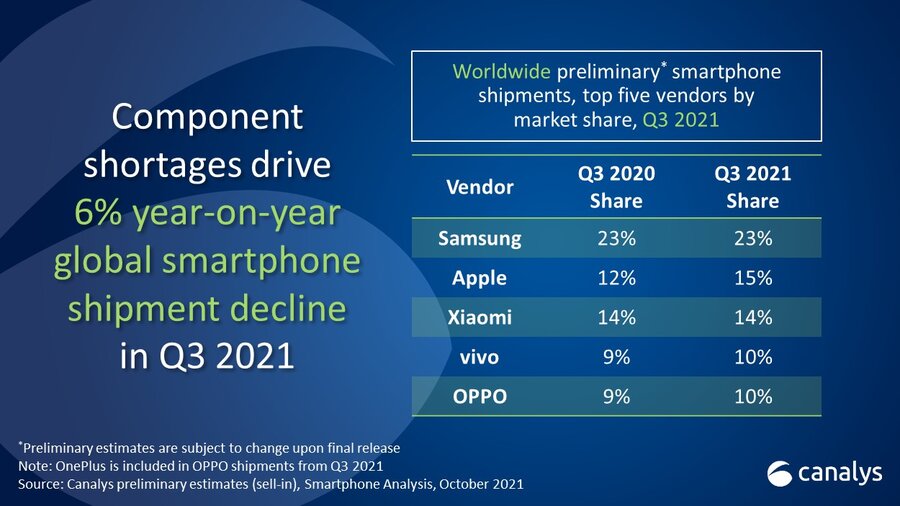
According to figures published by Canalys, Apple has managed to go back to Xiaomi and Oppo during the third quarter of the year. The Californian group has seized 15% of the market share, up 3% compared to last year in the midst of the pandemic.
Apple is already enjoying the resounding success of the iPhone 13
According to Canalys, Apple mainly benefits from the “Strong early demand” recorded by the iPhone 13. Arrived on the market at the end of September (ie the last days of the 3rd quarter), the new iPhones managed to give a boost to the brand’s sales. Moreover, some iPhone 13 configurations quickly found themselves out of stock when opening pre-orders. Some buyers will not receive their new smartphone for several weeks, a sign of the colossal appeal generated by the iPhone 13.
Unsurprisingly, Samsung retains the first place in the market with 23% of the shares, exactly like last year. In third place, we find Xiaomi. The Chinese manufacturer has managed to secure 14% of global sales, mirroring last year. Vivo and Oppo bring up the rear with 10% market share respectively, up 1% compared to the same period in 2020.
Despite the economic recovery, the smartphone market is currently slowing down, notes Canalys. According to the analysis firm, the mobile telephony market suffers from the shortage of computer chips. Unable to obtain enough components, manufacturers cannot manufacture enough terminals.
Also read: Xiaomi sold more smartwatches and bracelets than Apple in spring 2021
“The chipset famine is here. The smartphone industry strives to maximize device production as best it can. On the supply side, chip makers are raising prices to discourage over-ordering in an attempt to bridge the gap between supply and demand. But despite this, the shortages will not abate until much of 2022 ”, prophesies Ben Stanton, senior analyst at Canalys.