
The smartphone market is facing one of the biggest crises in recent years, as several manufacturers fail to meet the production targets described above. By the way, according to the market analysis agency Canalys, the Xiaomi is going through one of its worst periods while the Apple seems to pass through raindrops.
What is at stake is the global shortage of components and semiconductors that resulted in a 6% drop in the volume of smartphones sold in the last quarter. The worst of all? This drop is only the harbinger of what is to come, as there are no quick and effective solutions to the problem.
Component shortage particularly affects Xiaomi
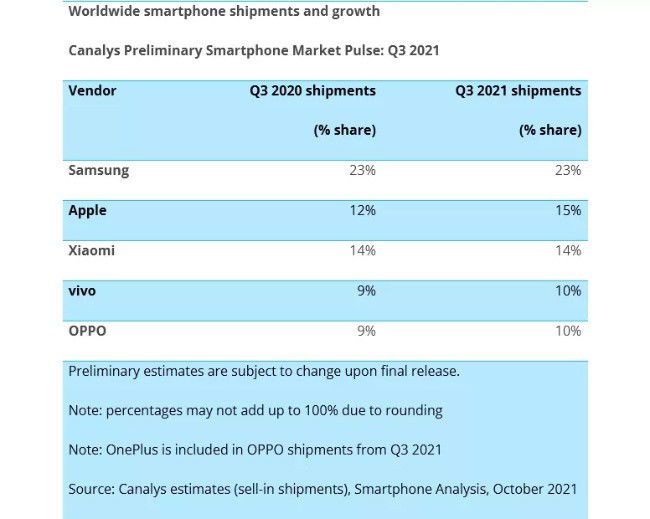
According to the Canalys agency, in the third quarter of 2021, smartphone sales fell by 6% compared to the same period in 2020. According to this entity, the results attest to the crisis in the sector and indicate new future contractions.
Amid the chaos felt along the production lines, Apple escapes these restrictions almost unscathed, and the iPhone 13 sells well.
The findings have now been published by the agency in question, reporting a considerable drop between the third quarter of 2020 and 2021.
Note that this decrease follows a 27% year-on-year increase during the first quarter of 2021, as well as an 11% increase during the second quarter of the year.
Now, however, the first signs of problems are appearing with the big manufacturers with the stock of components that is quickly running out. In particular, Xiaomi is seen as the brand most affected by the problem that affects the entire segment. Something that we can see above reflected in the annual stagnation, while other manufacturers (with the exception of Samsung) would grow.
Apple escapes component shortage instead of Xiaomi
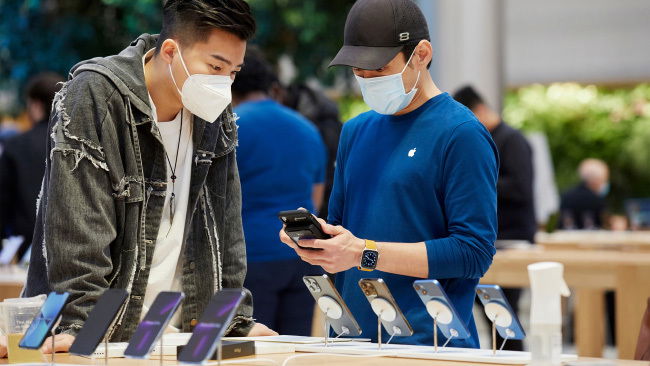
Apple increased its market share from 12% to 15% in the last quarter. The reasons for this, according to Canalys, are linked to the strong adherence to the new iPhone 13 models. Also, the manufacturer does not seem to have difficulties in the production of the required units, having dealt with this situation during the last year. .
However, we have recently announced the possibility that the production of the iPhone 13 will be reduced by 10 million units. Something that does not seem to affect the global volume of units available in the market, at least during the period in question.
At the same time, we see Samsung maintaining its first place. In fact, the South Korean tech company proves it with a 23% market share, unchanged from year to year.
In another focus, we see the group of brands of BBK Electronics, VIVO and OPPO slightly increasing their expression. Indeed, both manufacturers have gone from 9% to 10% of market share according to Canalys.
The semiconductor crisis will only get better in late 2022
Finally, together with the Canalys agency, Counterpoint has also lowered its forecasts for the second half of the year. In both cases, the reason given is the shortage of components and semiconductors that affects the entire market mobile.
For the average consumer, this can translate into an inability to buy a new smartphone. For example, they might be forced to wait longer to get their new Android and / or iOS mobile device.
Finally, on a less than positive note, Canalys predicts that this crisis will ease by the end of 2022. Therefore, we will have to live with these smartphone production delays for most of next year.